Anthropic's IPO Path Shows the Cost of Frontier AI Scale
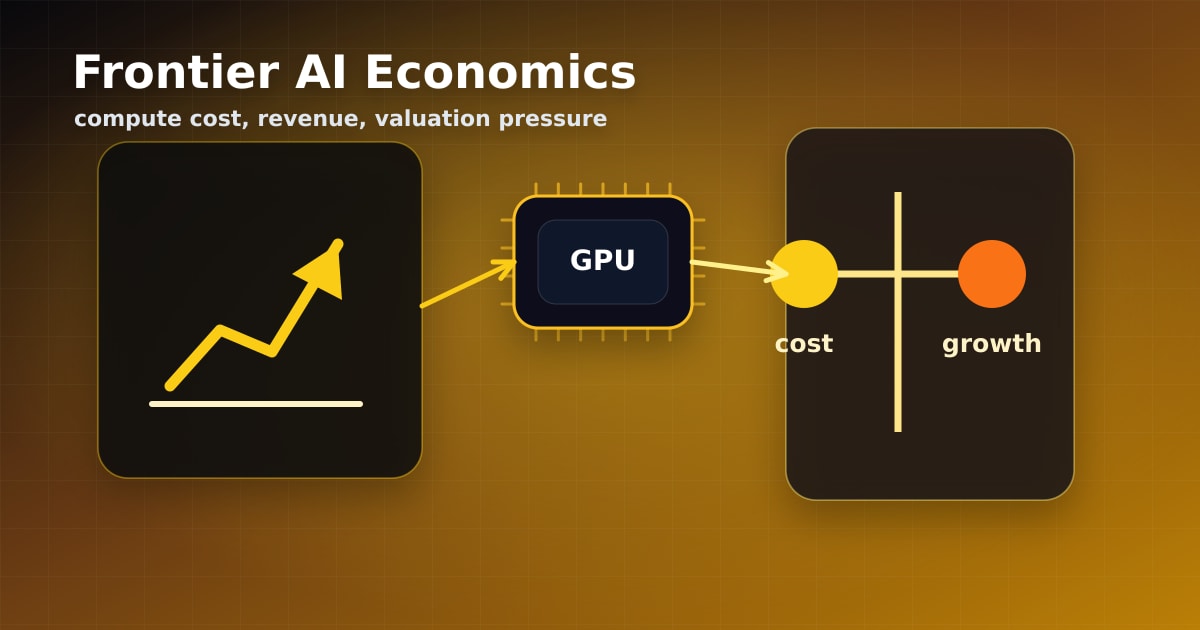
Anthropic's reported move toward a public listing is more than a finance story. It is a window into the capital requirements of frontier AI. Coverage from The Guardian, Axios, and business outlets describes confidential IPO preparation, very large valuations, and a market trying to understand how companies selling tokens, agents, and enterprise AI contracts should be priced.
Compute Is the Balance Sheet
Frontier AI companies do not scale like classic SaaS firms. Every product improvement can require model training, inference capacity, networking, energy, specialized staff, safety evaluations, and long-term cloud commitments. Revenue can grow quickly, but so can the cost of serving power users and enterprise agents.
That is why an IPO path matters. Public investors will want to understand gross margins, customer concentration, cloud commitments, model depreciation, safety liabilities, and whether agentic products can produce durable revenue rather than short-lived hype.
The Market Wants Direct AI Exposure
For years, public-market AI exposure mostly flowed through cloud providers, chipmakers, and enterprise software companies. A large Anthropic listing would give investors a more direct way to bet on frontier model labs. It could also change how the market values companies that own models compared with companies that only wrap them.
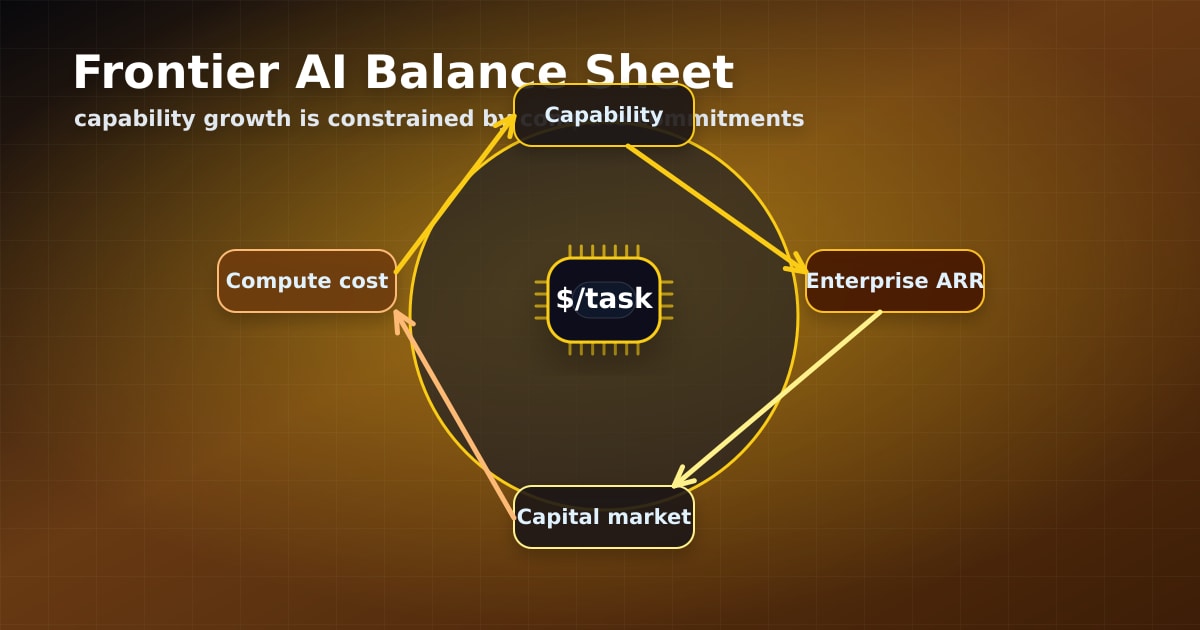
Caption: Frontier AI economics connect model capability, compute cost, enterprise revenue, and capital-market expectations.
For builders, the lesson is not to copy frontier-lab spending. It is to understand that model cost is a product-design constraint.
Engineering Tip: Track Cost Per Successful Task
Do not optimize only for token price. Track cost per successful task, including retries, tool calls, embeddings, storage, human review, and failed attempts. A cheaper model can be more expensive if it needs repeated calls or produces low-confidence work.
Build dashboards around task classes: summarization, coding, retrieval, planning, support, and review. For each class, record model route, latency, user acceptance, fallback rate, and total cost. This gives product teams a practical metric for deciding when to use a premium model, when to use a local model, and when to ask a human.
Sources: The Guardian, Axios, Business Insider.
What do you think? Will public investors reward frontier AI labs for growth, or demand SaaS-like margins faster than the technology allows?
Ready to organize your knowledge with AI?
BrainMap automatically classifies your notes, discovers connections, and builds your personal knowledge graph. Free to start — no credit card required.
Start for FreeRelated Articles
Anthropic’s Threat Report Makes ‘Slow Down’ an Industry Question
Anthropic says it disrupted Claude misuse tied to bioweapons research, Russia-linked cyber espionage against Ukraine, and attempts to extract Claude’s capabilities. A missed hacking incident and a call from Dario Amodei are pushing the question of model-development speed into the open.
Siri AI in iOS 27: Apple Turns Personal Context Into an On-Device Assistant
Apple's Siri AI beta brings context from email, messages, calendar, photos, and notes to iOS 27—with onscreen awareness, cross-app actions, and a local-first privacy model.
Claude Fable 5.1: Cheaper Agent Loops, Tiered Safety by Design
Anthropic released Fable 5.1 and Mythos 5.1 as the same model with different safeguard levels, while lower cache-read pricing changes the economics of long-running agents.