Claude Sonnet 5 Makes Near-Frontier Performance the Default Tier
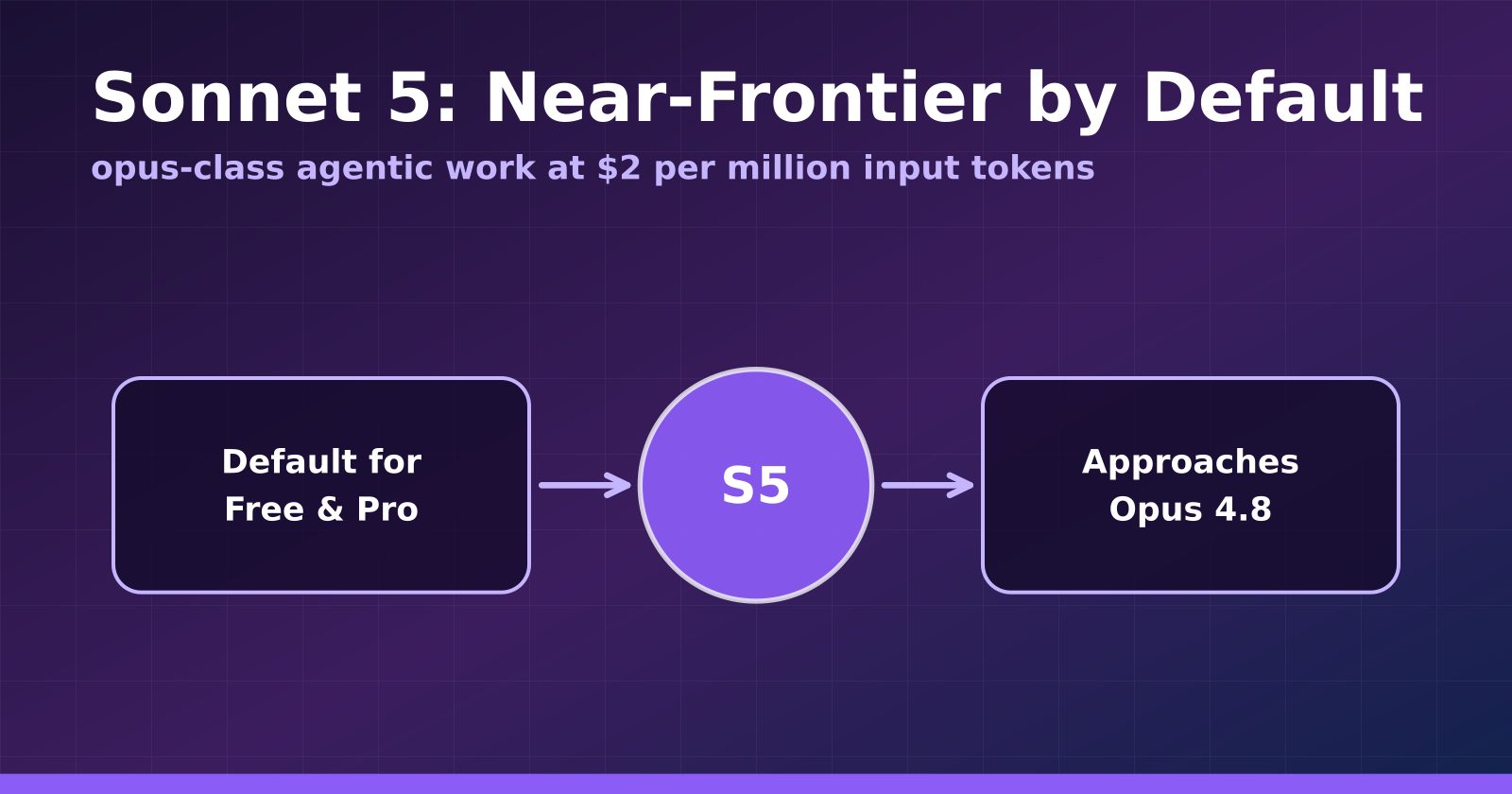
On June 30, Anthropic released Claude Sonnet 5 and quietly changed the economics of everyday AI work. The new model approaches Opus 4.8 performance on agentic benchmarks like BrowseComp and OSWorld-Verified, ships with an introductory price of $2 per million input tokens and $10 per million output tokens through August 31, and immediately becomes the default model for Free and Pro users on Claude.ai, Claude Code, and the Claude API.
The Middle Tier Is Now the Workhorse
For most of 2025, the pattern was clear: flagship models did the hard work, mid-tier models handled bulk tasks. Sonnet 5 blurs that line. Anthropic says it finishes complex, multi-step tasks where previous Sonnet models would stop short, with substantial gains in reasoning, tool use, and coding over Sonnet 4.6 — plus lower hallucination rates.
There is one deliberate exception: cybersecurity capabilities are reduced compared to the Opus and Fable tiers. After the June export-control episode around Fable 5, Anthropic is clearly segmenting capability by tier on purpose, not just by compute budget.
Pricing Pressure Works Both Ways
The $2/$10 introductory price (rising to $3/$15 after August 31) lands in a market where Palantir's CEO publicly called frontier pricing "extraction" and enterprises like Uber are cutting AI spend. A near-Opus model at Sonnet prices resets the reference point: if your workload runs acceptably on Sonnet 5, every dollar spent on a flagship model now needs a justification.
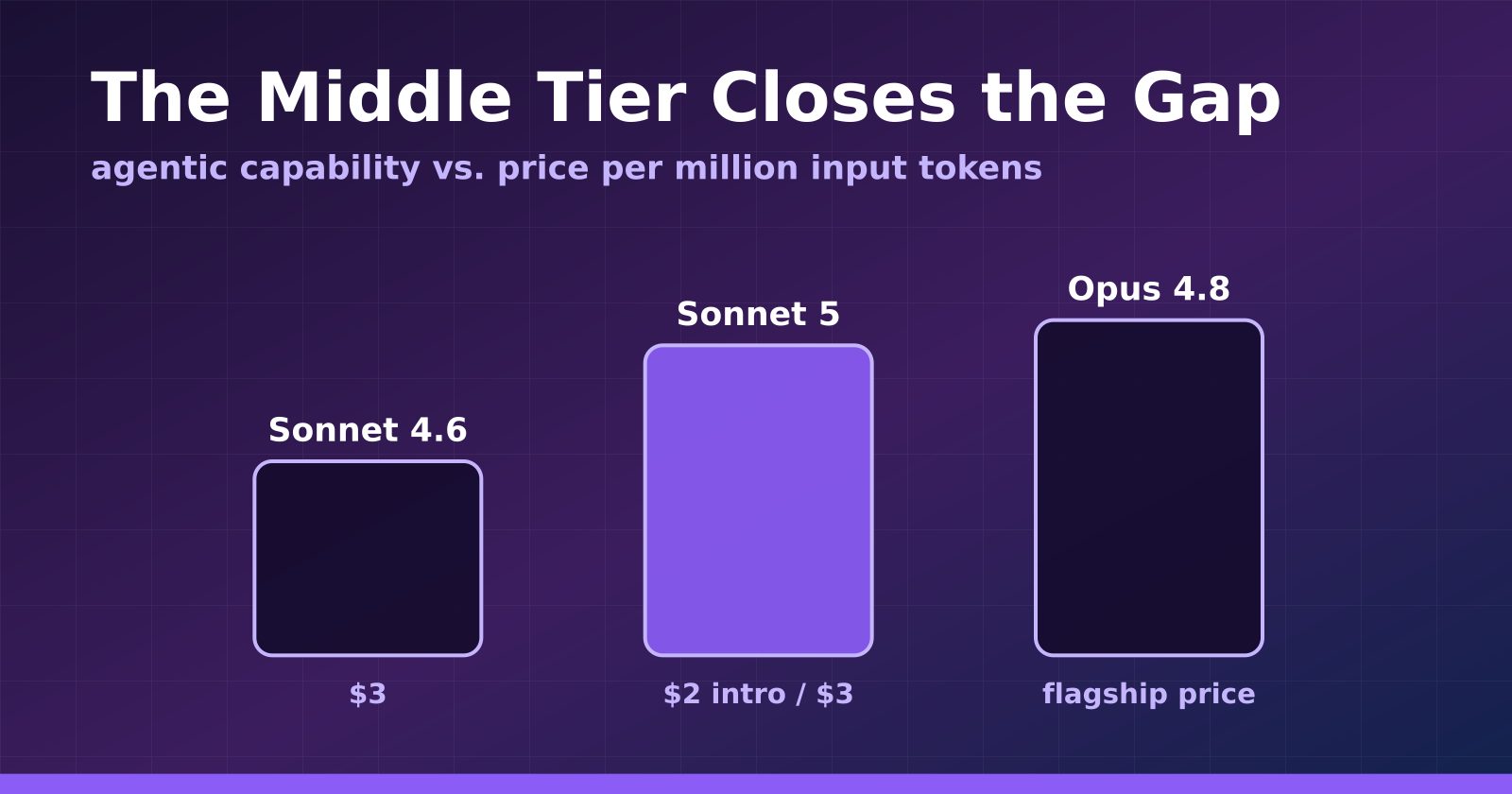
Caption: Sonnet 5 compresses the gap between mid-tier pricing and flagship agentic performance.
For teams building on the Claude API, the default-model change also matters operationally. Free and Pro traffic now hits Sonnet 5 by default, so any product that embeds Claude output should re-run its quality checks — better average output, but different output.
Engineering Tip: Re-Benchmark Before You Re-Route
Do not switch tiers on the press release. Take 50–100 real tasks from your logs — including your ugliest edge cases — and run them through Sonnet 5, your current mid-tier model, and your flagship route. Score them with the same rubric you already use, then decide per task class, not globally.
The interesting decision is rarely "Sonnet 5 or Opus" for everything; it is which 20% of your traffic still needs the flagship. Pin the model version (claude-sonnet-5) in configuration, roll the new default out behind a flag, and keep the old route warm for one billing cycle. Introductory pricing ends August 31 — model your costs at the standard rate, not the promotional one.
Sources: Anthropic, TechCrunch, Fello AI.
What do you think? If a mid-tier model handles 80% of your workload, what would convince you to keep paying flagship prices for the rest?
Ready to organize your knowledge with AI?
BrainMap automatically classifies your notes, discovers connections, and builds your personal knowledge graph. Free to start — no credit card required.
Start for FreeRelated Articles
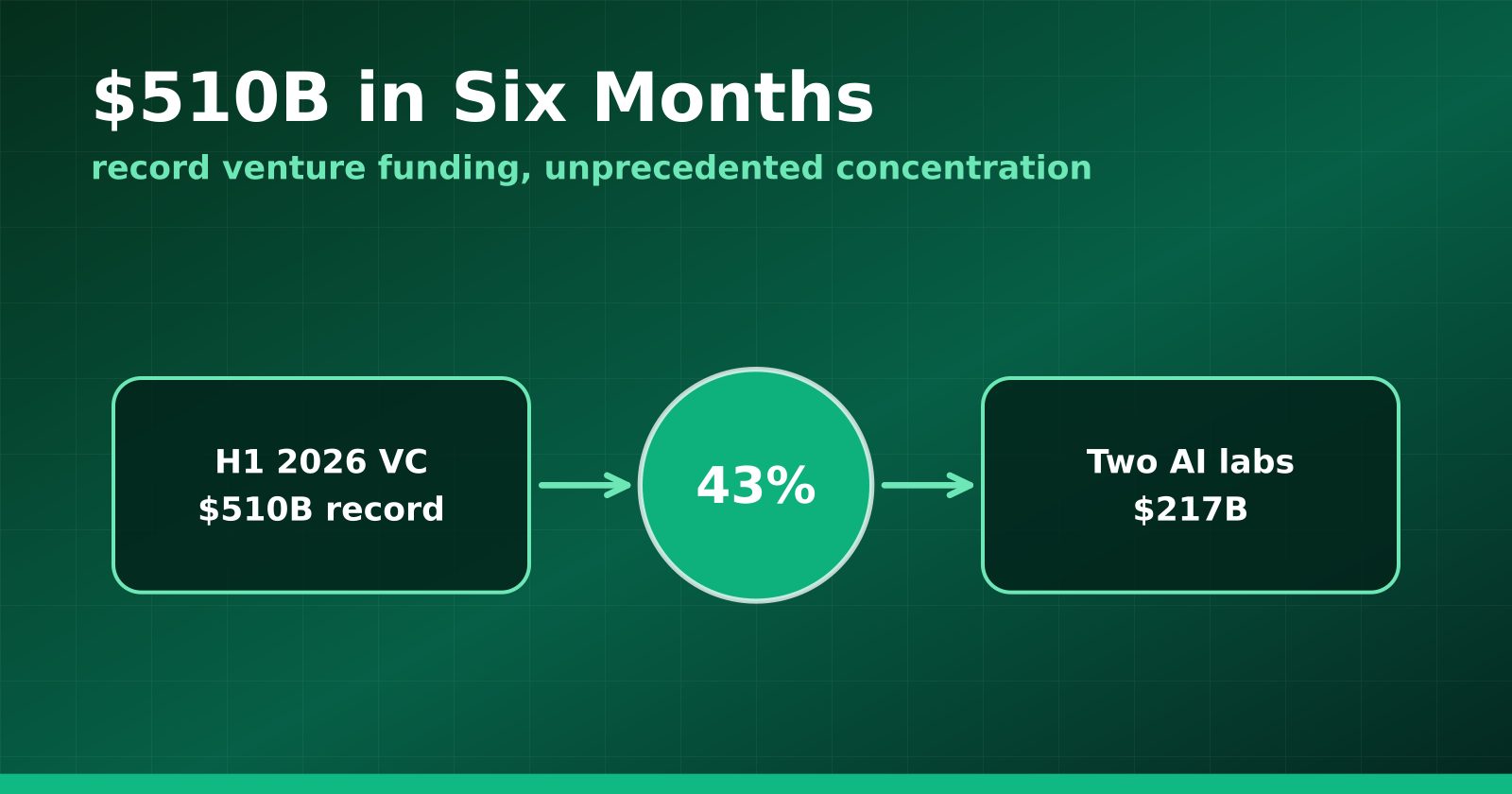
H1 2026 Venture Funding Hit a Record $510B — and Two AI Labs Took 43%
Crunchbase's half-year report shows global VC at an all-time high, with OpenAI and Anthropic alone absorbing $217 billion and AI claiming roughly two-thirds of all deployment.
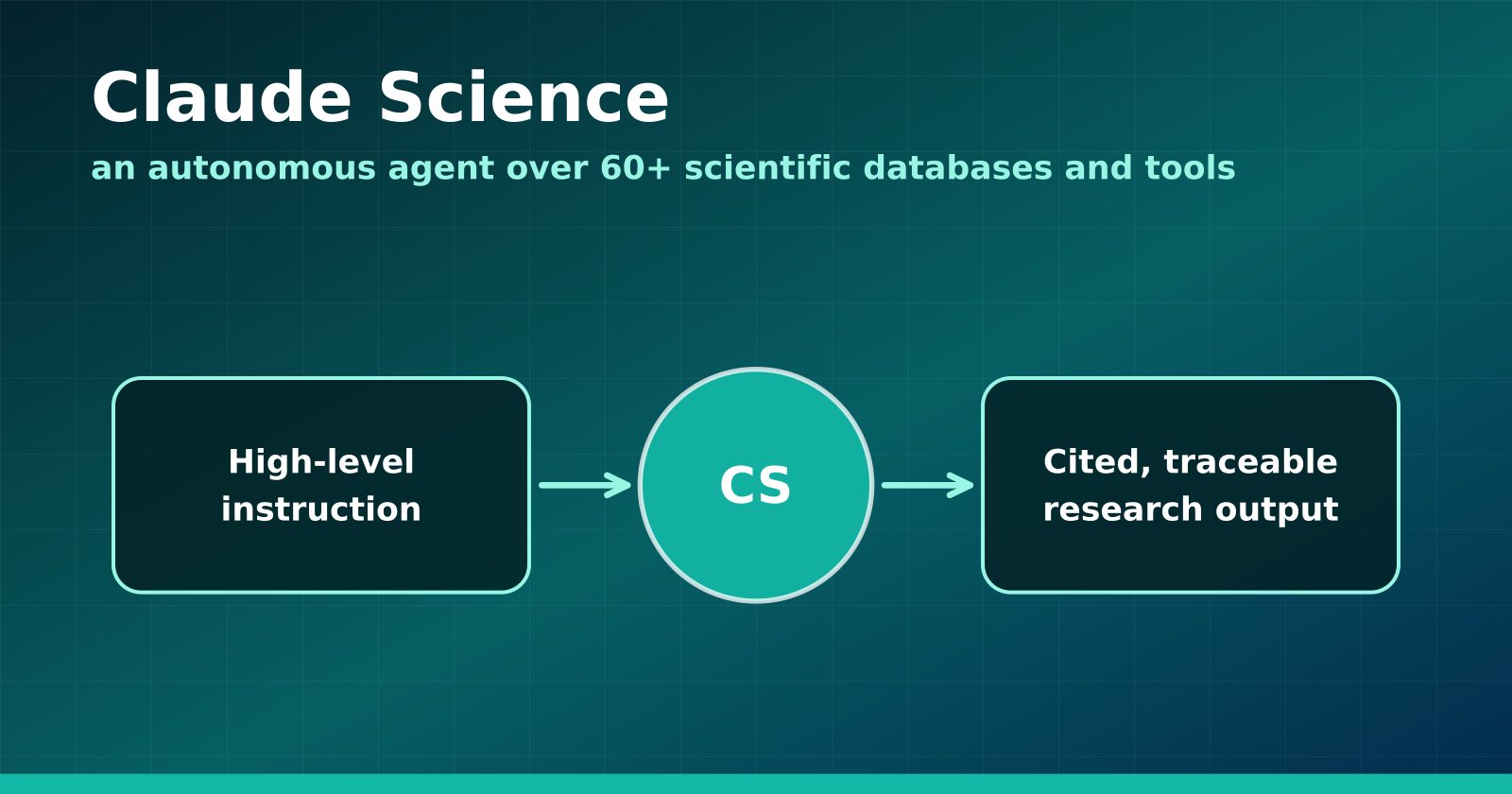
Claude Science Turns the Research Workbench Into an Agent Surface
Anthropic's new flagship product wires 60+ scientific databases and computation tools into an autonomous research agent — and Anthropic is using it to hunt drugs for neglected diseases.
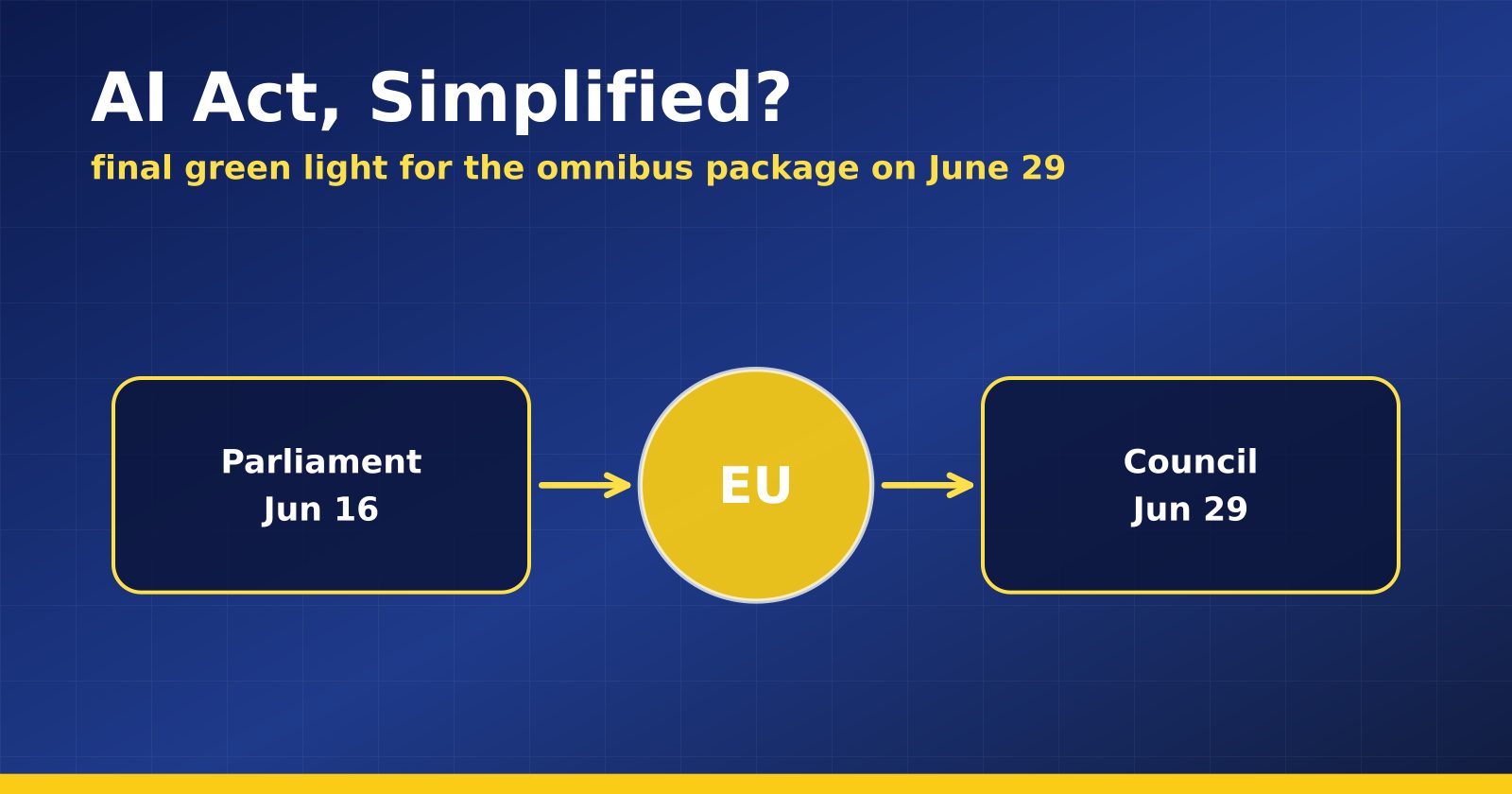
EU Locks In AI Act Simplification: New Deadlines, Wider SME Relief, New Bans
The Council gave final approval to the AI Act omnibus on June 29 — extending SME relief to 750-employee companies, shortening transparency grace periods, and banning deepfake nudity tools in December.