Apple, Gemini, and the Next Siri: AI Moves Into the OS Layer
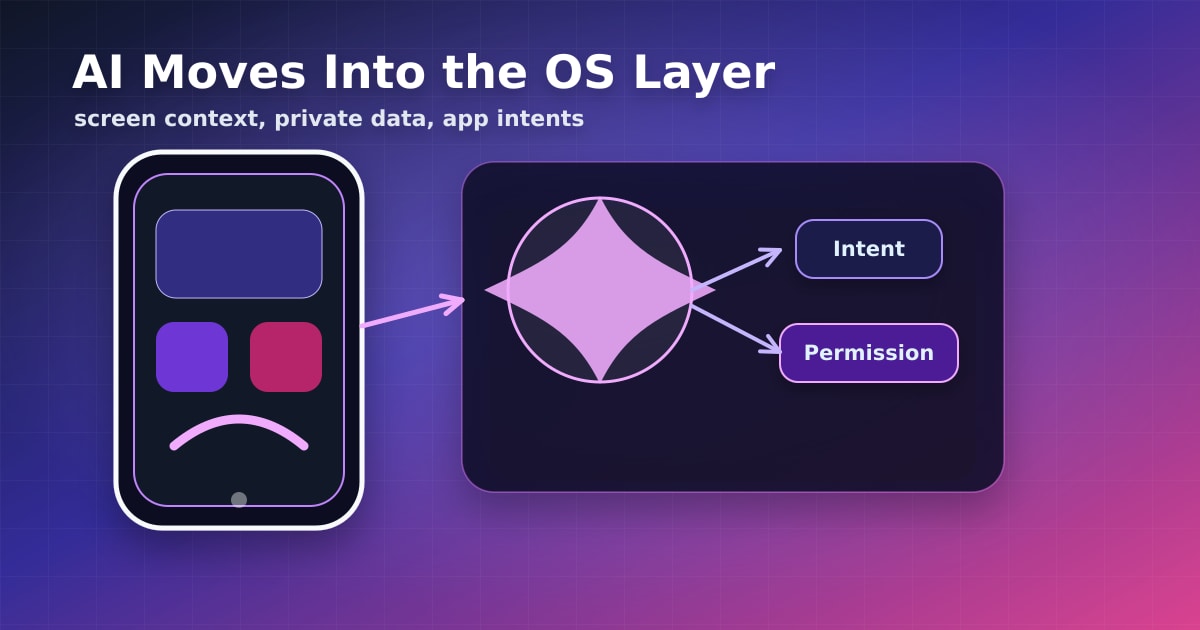
Apple's latest Siri direction is important because it treats AI as part of the operating system, not a separate chatbot tab. Coverage around WWDC 2026 points to a redesigned Siri experience with stronger personal context, screen awareness, and Google Gemini support behind parts of the reasoning stack. The technical challenge is to make the assistant useful without turning the phone into a data-leaking automation box.
From Voice Command to Context Engine
Classic Siri was mostly a command router: set a timer, send a message, open an app. A modern assistant has to understand the current screen, recent messages, photos, calendar state, app intents, and user preferences. That makes Siri less like a speech interface and more like a context engine that can decide which app action should happen next.
Gemini support changes the expectations around reasoning and multimodal understanding. But Apple's differentiation remains privacy architecture: on-device processing where possible, private cloud execution where needed, and explicit boundaries around personal data.
Why App Developers Should Care
If OS-level assistants become the default interface, app developers need to expose clean actions, semantic metadata, and permission boundaries. A user may not open your app directly. They may ask Siri to "summarize today's research notes" or "find the receipt from last week and add it to expenses." Apps that expose reliable intents and structured data will feel native in that future.
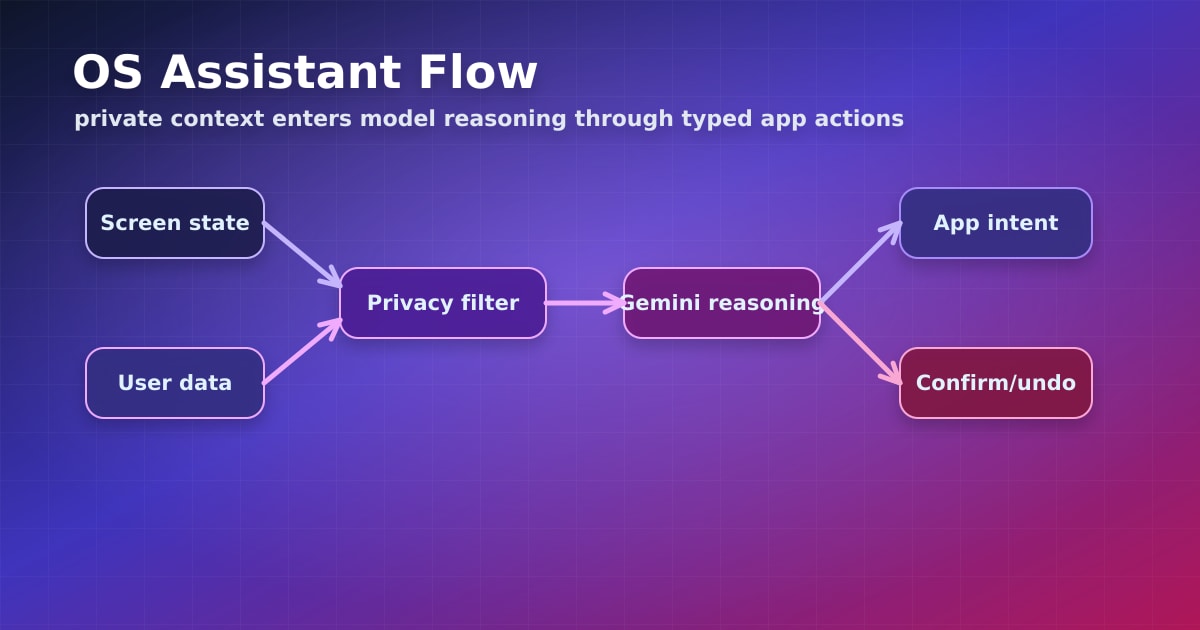
Caption: OS assistants depend on model reasoning, private context, app intents, and user-controlled permissions.
The interface shift also changes analytics. Success will be measured less by screen visits and more by completed user goals.
Engineering Tip: Make App Actions Agent-Ready
Design app actions as small, typed, reversible operations. Each action should have a clear name, required parameters, permission requirements, and predictable error states. Avoid hidden side effects. If an action mutates user data, provide a preview mode and an undo path.
For AI-facing metadata, write descriptions that explain when an action should be used and when it should not be used. Return structured results instead of only human-readable strings. When the OS assistant asks your app to act, it should receive enough machine-readable state to continue the workflow safely.
Sources: Business Insider, T3 WWDC 2026 Live, Apple Intelligence.
What do you think? Will OS-level agents make apps easier to use, or will they hide too much of the product experience?
Ready to organize your knowledge with AI?
BrainMap automatically classifies your notes, discovers connections, and builds your personal knowledge graph. Free to start — no credit card required.
Start for FreeRelated Articles
Anthropic’s Threat Report Makes ‘Slow Down’ an Industry Question
Anthropic says it disrupted Claude misuse tied to bioweapons research, Russia-linked cyber espionage against Ukraine, and attempts to extract Claude’s capabilities. A missed hacking incident and a call from Dario Amodei are pushing the question of model-development speed into the open.
Siri AI in iOS 27: Apple Turns Personal Context Into an On-Device Assistant
Apple's Siri AI beta brings context from email, messages, calendar, photos, and notes to iOS 27—with onscreen awareness, cross-app actions, and a local-first privacy model.

Claude Fable 5.1: Cheaper Agent Loops, Tiered Safety by Design
Anthropic released Fable 5.1 and Mythos 5.1 as the same model with different safeguard levels, while lower cache-read pricing changes the economics of long-running agents.