GPT-5.6 Sol, Terra, and Luna: OpenAI Splits the Frontier Into Three Lanes
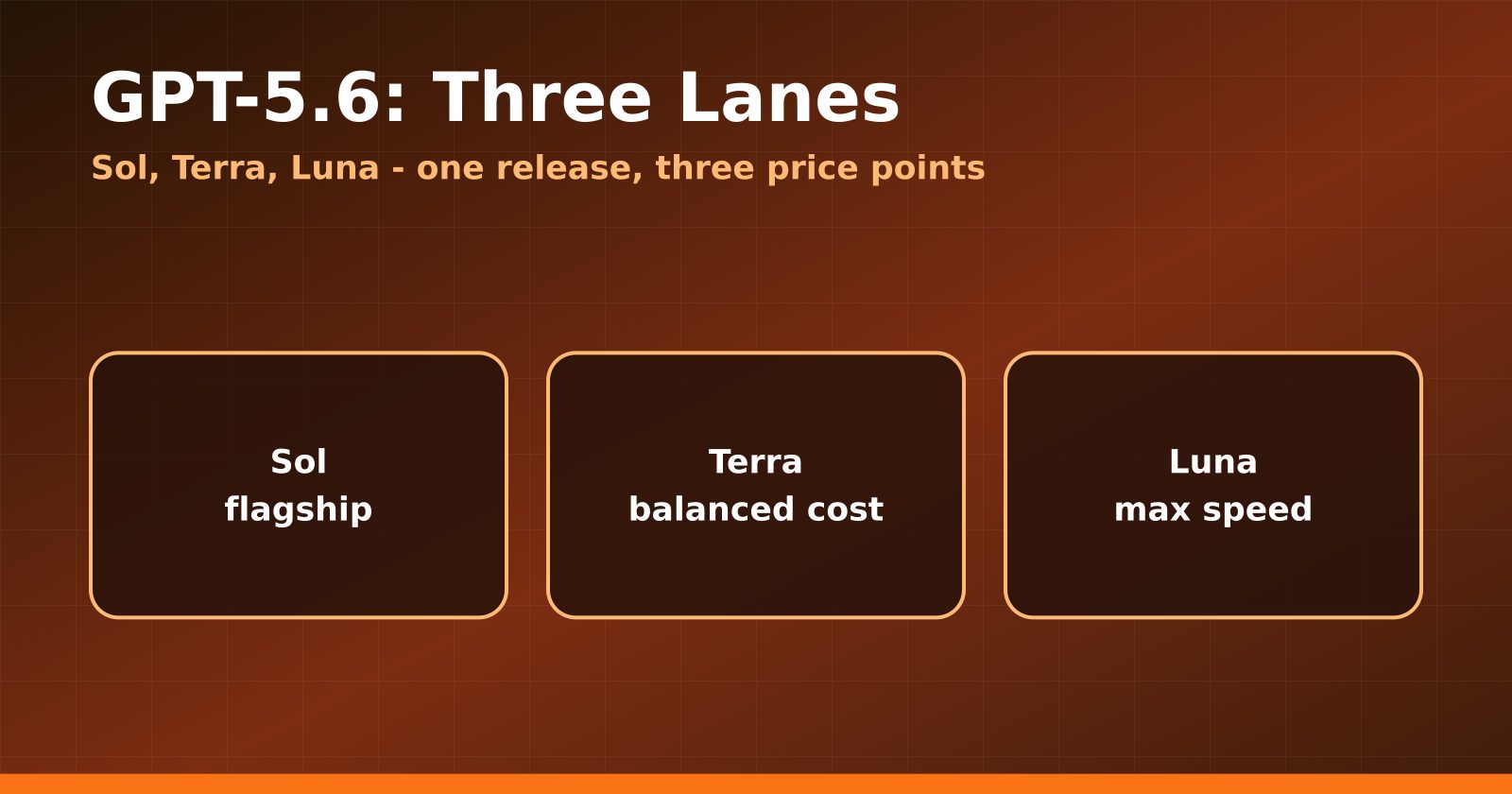
OpenAI is rolling out GPT-5.6 as a three-model family, and the naming tells the strategy: Sol is the flagship, Terra is the capable lower-cost option, and Luna is the fastest and cheapest. The release started as a limited preview for a select group of trusted partners through the API and Codex, with broader availability in ChatGPT and the API expected in the coming weeks. Reported numbers set the tone: Sol Ultra scored 91.9% on Terminal-Bench 2.1, Terra is priced around $2.50/$15 per million tokens, and Luna at roughly $1/$6.
A Product Line, Not a Model
The days of "the new GPT" as a single artifact are over. GPT-5.6 launches as a portfolio with distinct cost-latency-capability positions, mirroring what Anthropic did with Opus, Sonnet, and Haiku — and landing days after Claude Sonnet 5 reset mid-tier pricing. Competition between labs is no longer model-versus-model; it is lineup-versus-lineup, fought at every price point simultaneously.
The speed story may matter most for products. OpenAI is bringing GPT-5.6 Sol to Cerebras hardware at up to 750 tokens per second in July, initially for select customers. Frontier-quality output at that speed changes what interactive AI feels like: full agent plans render in the time a spinner used to show.
The Preview-First Rollout
The trusted-partner preview also signals how frontier releases now work post-Fable-5: staged access, select organizations first, general availability later. OpenAI has publicly said it does not believe government access review "should become the long-term default," but the era of day-one global drops looks finished either way.
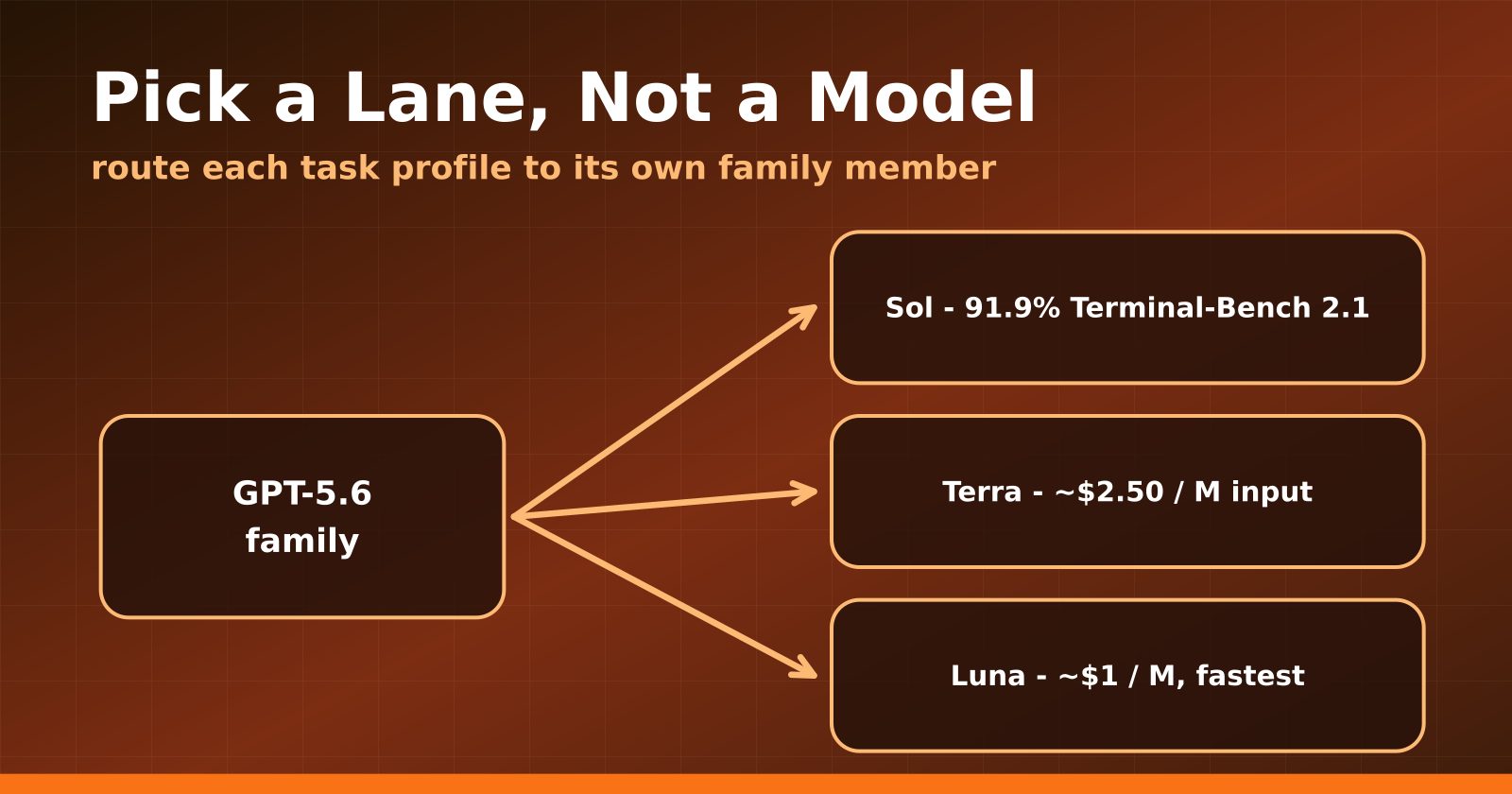
Caption: One release, three lanes — flagship capability, balanced cost, and maximum speed.
Engineering Tip: Architect for Families, Not Models
If your code has one MODEL_NAME constant, you are underusing this generation. Define routes by task profile — deep_reasoning, bulk_processing, interactive_ui — and map each to a family member with its own latency budget and cost ceiling. When GPT-5.6 reaches general availability, you update a mapping, not your application logic.
Two practical rules. First, never assume family members behave identically: Luna-class models trade subtle capability for speed, so run your evals per lane, not per family. Second, treat announced speeds as peak numbers — benchmark tokens-per-second on your own prompts and regions before promising latency to users. A 750 tok/s headline on selected hardware is not your p95.
Sources: OpenAI, Crypto Briefing, LLM Stats.
What do you think? Would you rather have one model that does everything, or three specialized lanes you have to route between?
Ready to organize your knowledge with AI?
BrainMap automatically classifies your notes, discovers connections, and builds your personal knowledge graph. Free to start — no credit card required.
Start for FreeRelated Articles
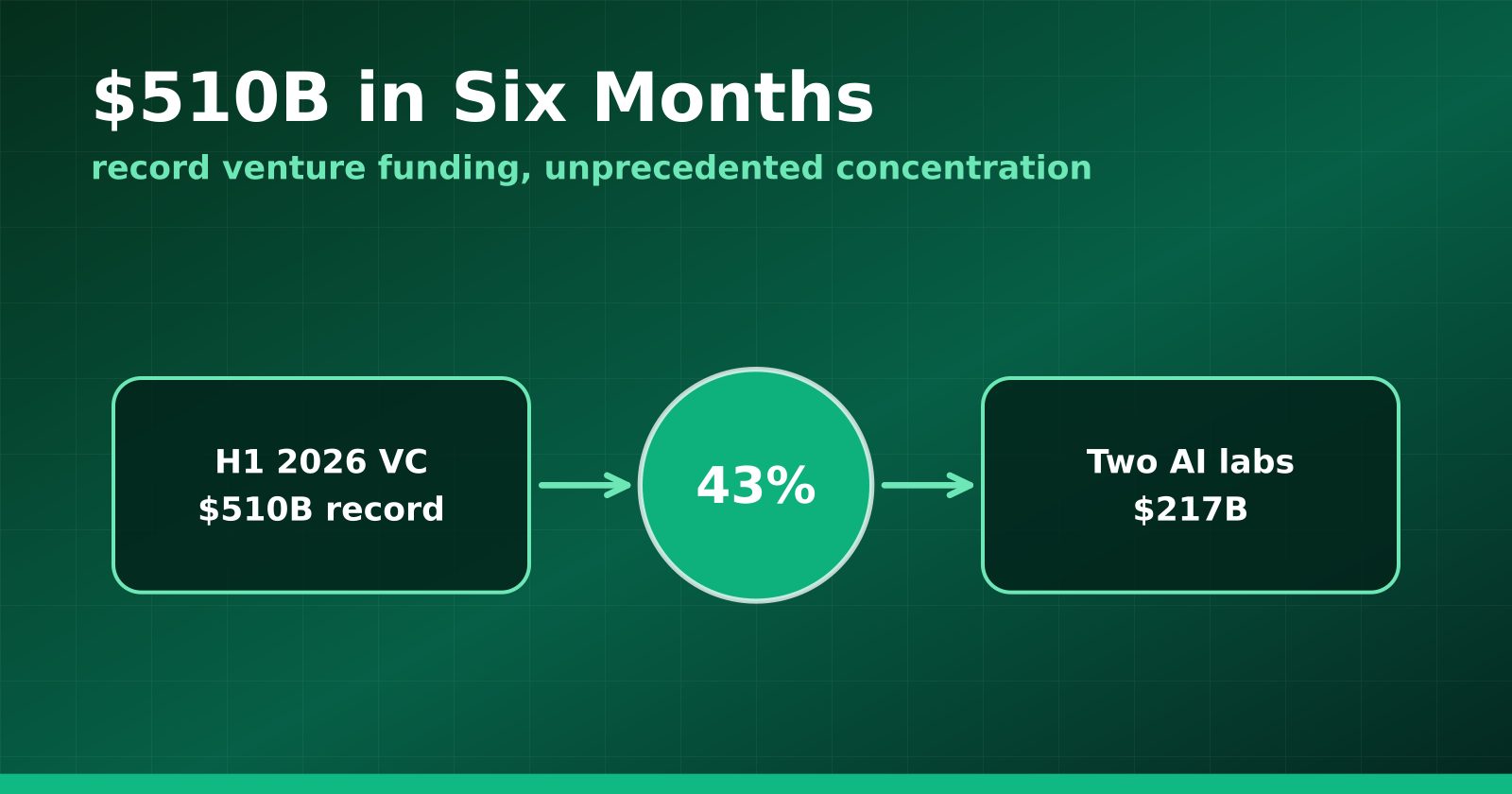
H1 2026 Venture Funding Hit a Record $510B — and Two AI Labs Took 43%
Crunchbase's half-year report shows global VC at an all-time high, with OpenAI and Anthropic alone absorbing $217 billion and AI claiming roughly two-thirds of all deployment.
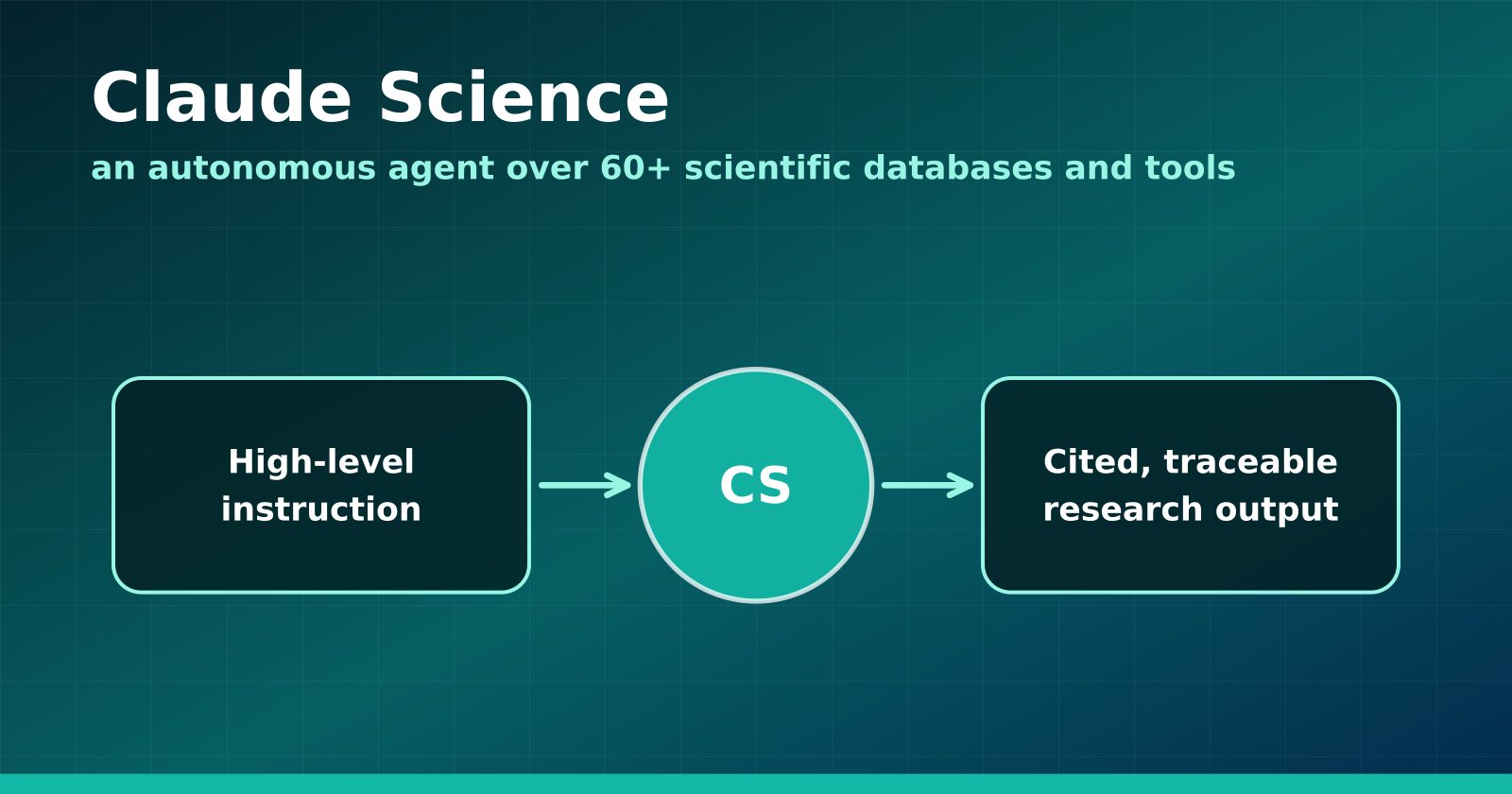
Claude Science Turns the Research Workbench Into an Agent Surface
Anthropic's new flagship product wires 60+ scientific databases and computation tools into an autonomous research agent — and Anthropic is using it to hunt drugs for neglected diseases.
Claude Sonnet 5 Makes Near-Frontier Performance the Default Tier
Anthropic's Sonnet 5 launches at $2 per million input tokens, approaches Opus 4.8 on agentic benchmarks, and becomes the default for Free and Pro users.