Grok 4.5 Enters Private Beta as xAI Commits to Monthly Model Releases
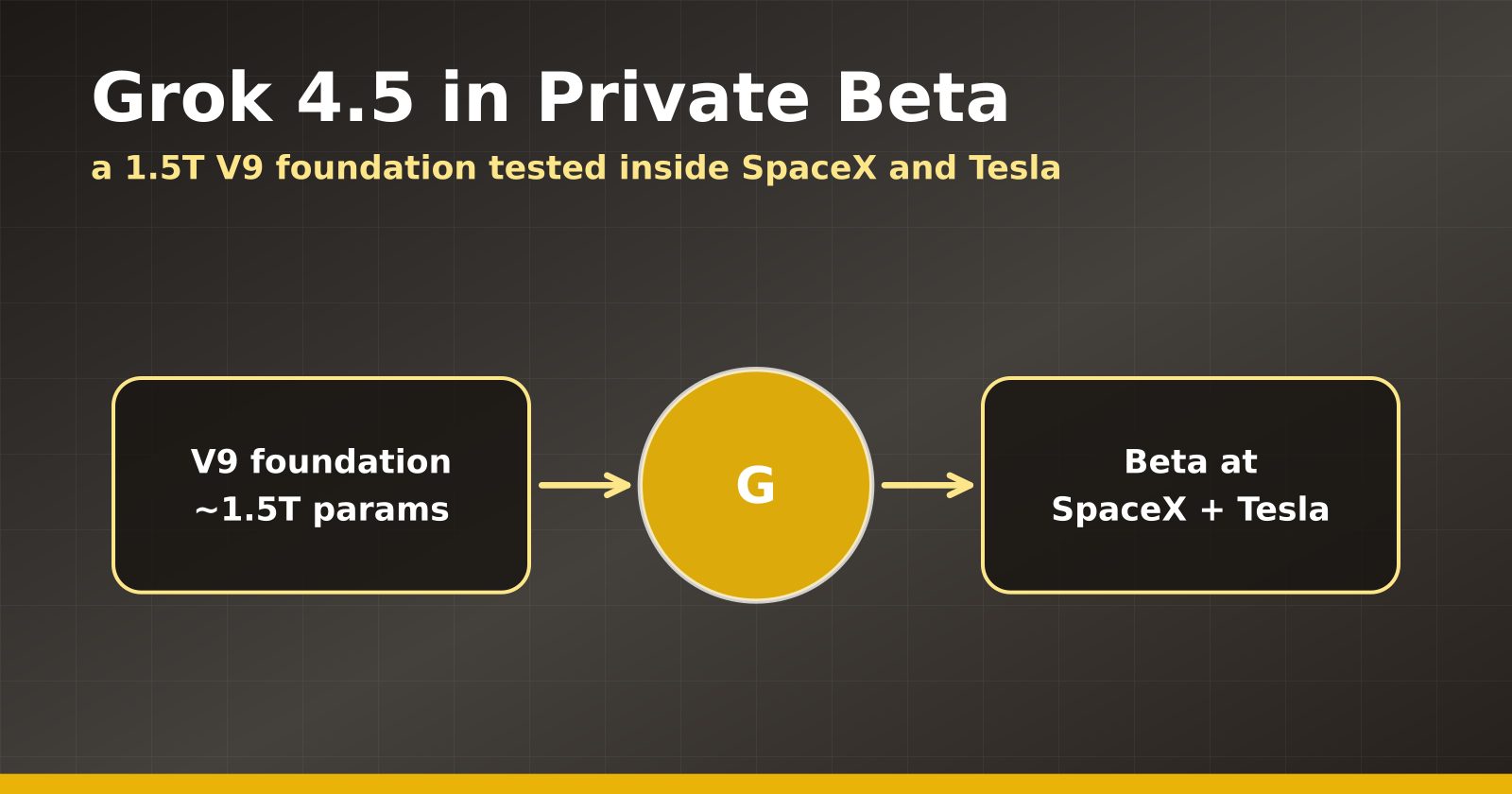
On June 28, Elon Musk confirmed that Grok 4.5 is running in private beta with teams at SpaceX and Tesla. The model sits on V9, a ground-up redesign of xAI's architecture at roughly 1.5 trillion parameters, trained partly on coding session data from Cursor — the IDE company SpaceX acquired for $60 billion in June. Musk claims performance "close to, perhaps exceeding Opus." The more consequential announcement is the cadence: xAI plans to ship V9-based model variants monthly through the rest of 2026, with Grok 5 targeting 6–10 trillion parameters on the Colossus 2 cluster.
The Beta Site Is the Moat
Most labs beta-test with API partners. xAI's private beta runs inside rocket factories and car plants — production environments the company's owner also controls. That vertical integration now extends to training data: Cursor's real-world coding sessions are exactly the agentic, tool-mediated interaction data every lab wants and few can buy. The Musk conglomerate is becoming a closed loop where models train on internal work, deploy into internal operations, and improve through xAI's Grok Build harness on daily cycles.
Monthly Releases Are a Different Product
A monthly cadence sounds like faster progress, but for anyone building on the API it is a different contract. Quarterly releases give you time to evaluate, migrate, and stabilize. Monthly releases mean the model under your product changes faster than most teams' release cycles — regression risk becomes continuous rather than episodic.
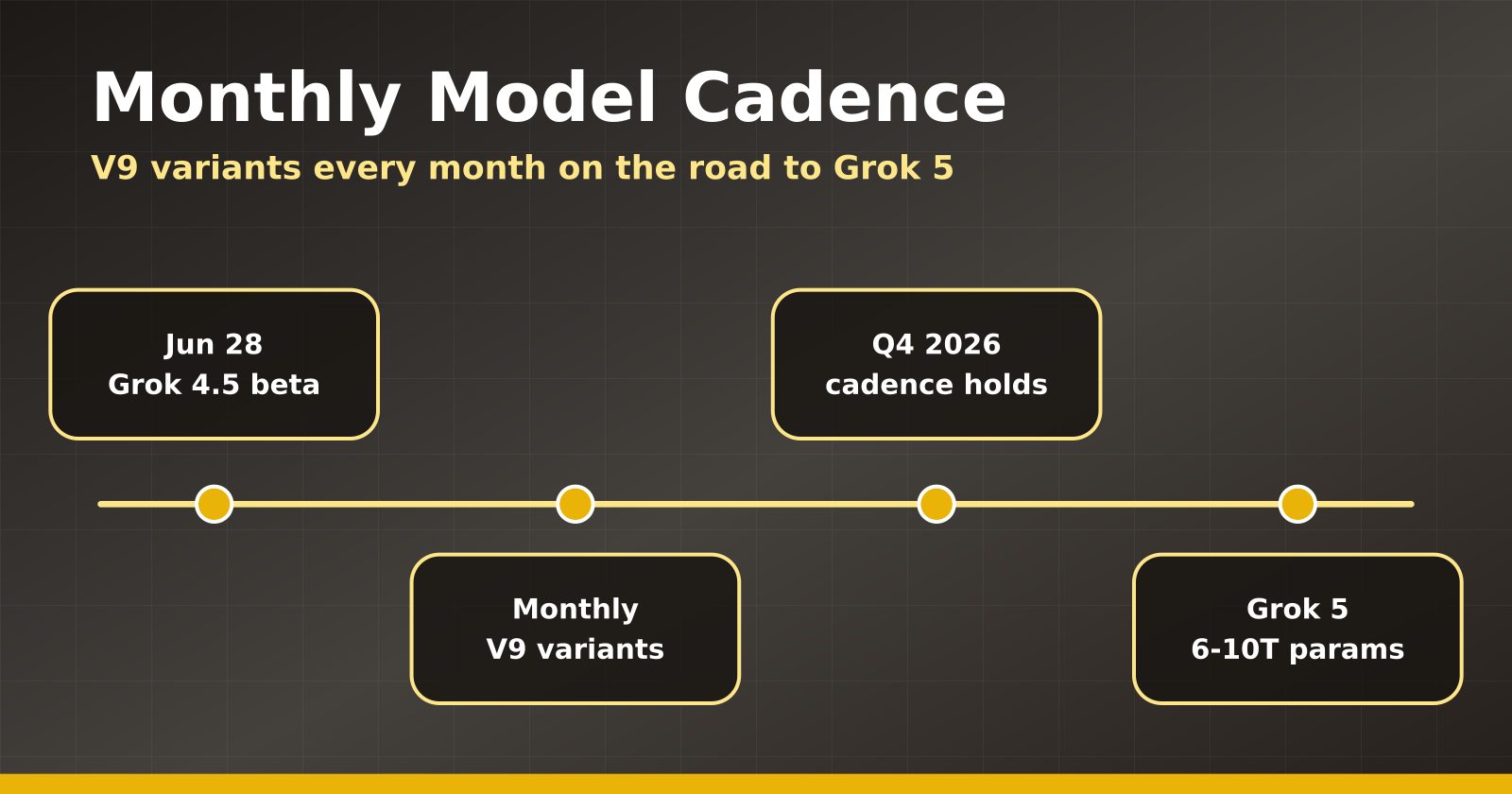
Caption: One V9 foundation, monthly variants, and a 6–10T Grok 5 at the end of the runway.
There is also an unresolved verification gap: "close to, perhaps exceeding Opus" is a founder quote, not a benchmark table, and private betas inside affiliated companies produce no public evals. Until the model ships broadly, treat the claim as a roadmap signal rather than a measured fact.
Engineering Tip: Build a Regression Net Before You Need One
If any provider in your stack moves to monthly (or faster) releases, your defense is an automated eval pipeline that runs on every model version — yours to define, not the vendor's. Keep a suite of 100–300 real tasks with scored expected outputs, run it automatically when a new version appears, and gate promotion on the diff: what improved, what regressed, what changed silently. Pin versions in production, never aliases like latest; upgrade on your schedule, with data.
The teams that thrive under fast cadences are not the ones that adopt fastest — they are the ones whose harness tells them within hours whether adopting is safe.
Sources: xAI, Releasebot, Build Fast With AI.
What do you think? Is a monthly model cadence progress you can use, or churn you have to defend against?
Ready to organize your knowledge with AI?
BrainMap automatically classifies your notes, discovers connections, and builds your personal knowledge graph. Free to start — no credit card required.
Start for FreeRelated Articles
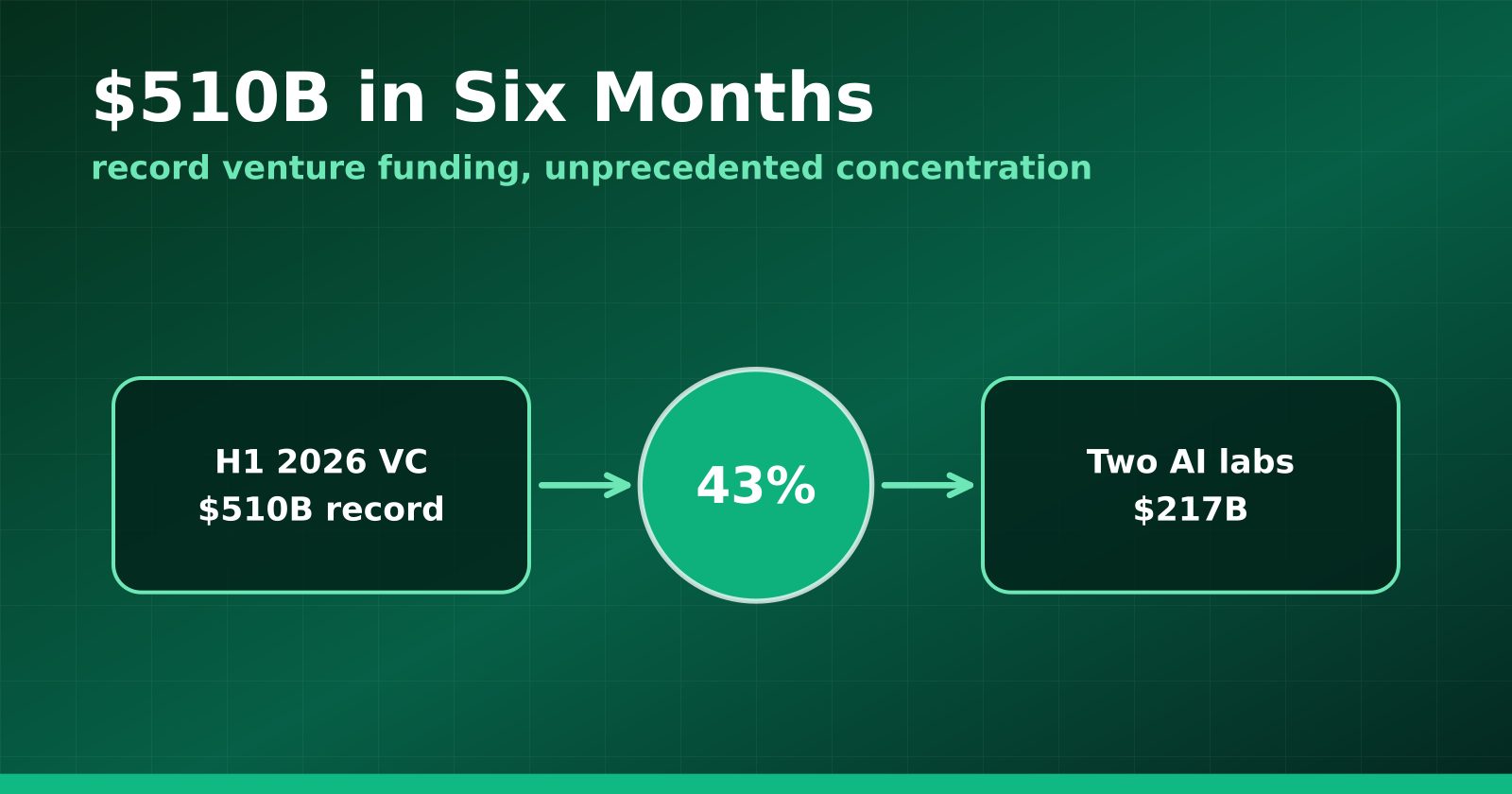
H1 2026 Venture Funding Hit a Record $510B — and Two AI Labs Took 43%
Crunchbase's half-year report shows global VC at an all-time high, with OpenAI and Anthropic alone absorbing $217 billion and AI claiming roughly two-thirds of all deployment.
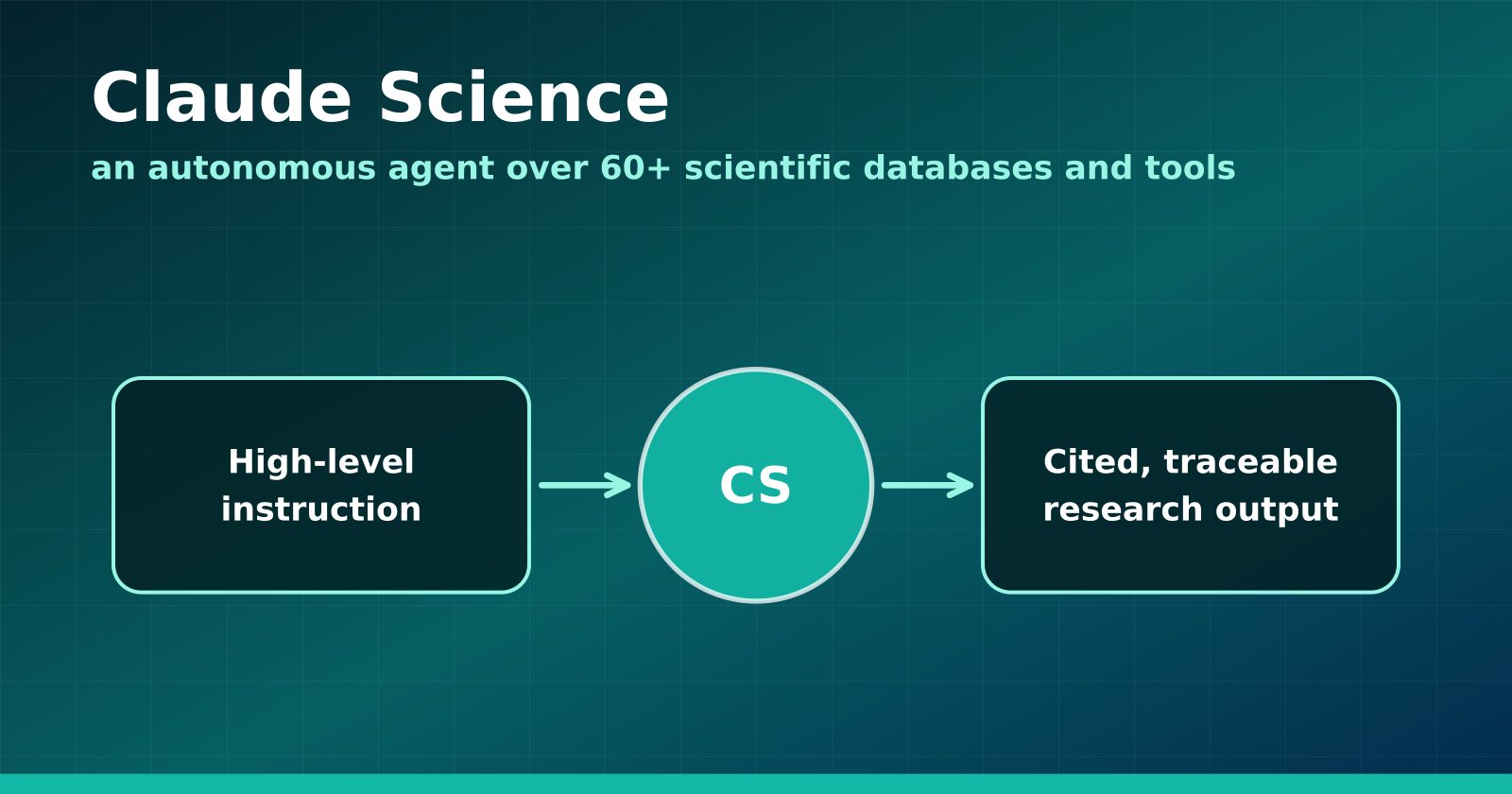
Claude Science Turns the Research Workbench Into an Agent Surface
Anthropic's new flagship product wires 60+ scientific databases and computation tools into an autonomous research agent — and Anthropic is using it to hunt drugs for neglected diseases.
Claude Sonnet 5 Makes Near-Frontier Performance the Default Tier
Anthropic's Sonnet 5 launches at $2 per million input tokens, approaches Opus 4.8 on agentic benchmarks, and becomes the default for Free and Pro users.