LongCat-2.0: A 1.6-Trillion-Parameter Open Model Trained Without US Chips
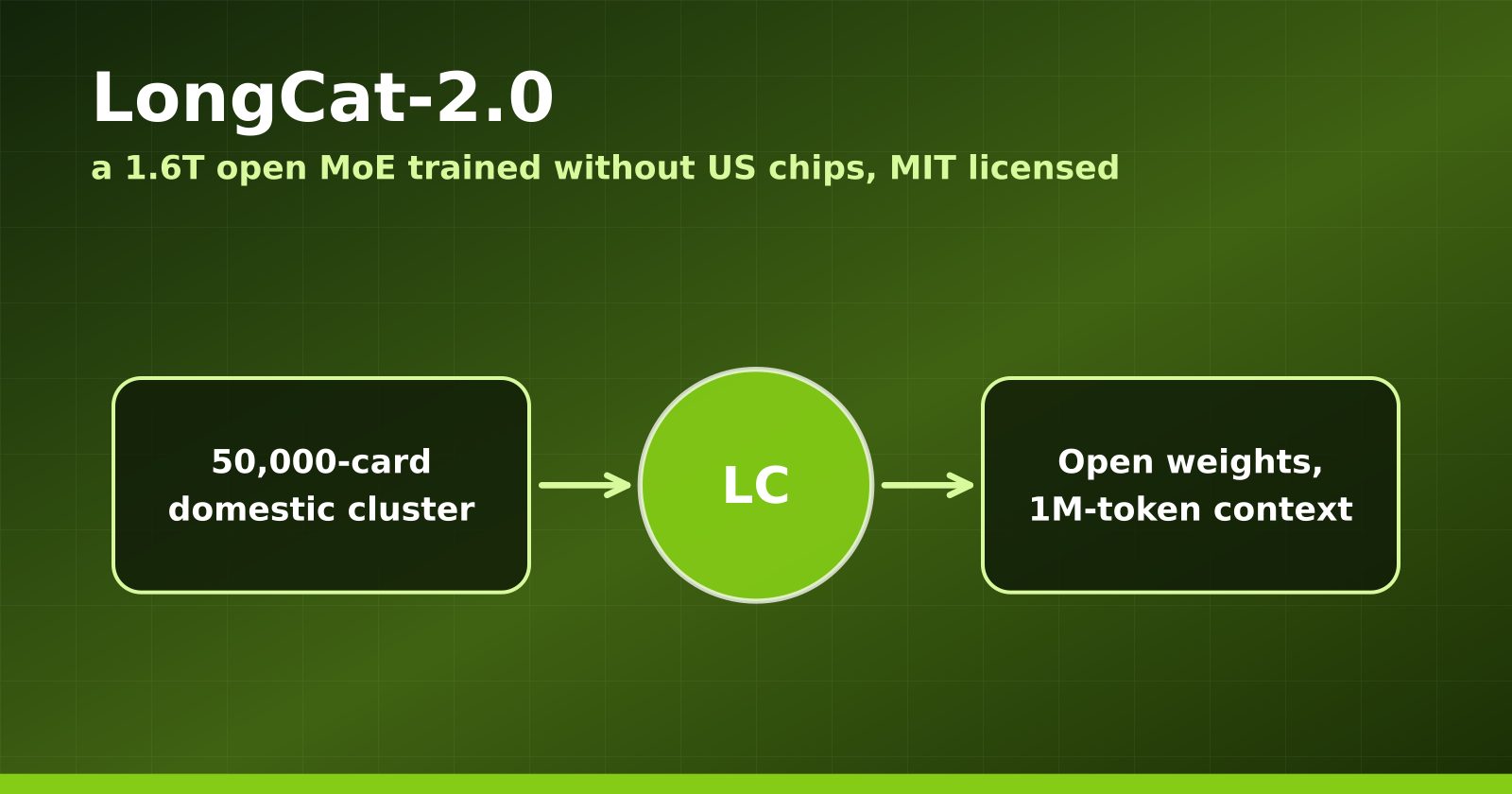
On June 30, Chinese delivery giant Meituan open-sourced LongCat-2.0, and three facts make it more than another model release. It is a 1.6-trillion-parameter Mixture-of-Experts model with native 1-million-token context, released under the MIT license. It reports 59.5% on SWE-bench Pro — edging past GPT-5.5's reported 58.6% — and 70.8% on Terminal-Bench. And the entire training run happened on a 50,000-card Ascend cluster inside China, with no US hardware involved.
The Owl Alpha Gambit
Before the reveal, LongCat-2.0 had been deployed anonymously on OpenRouter as "Owl Alpha," where it climbed into the top ranks by developer call volume. Developers picked it on merit, with no brand attached — arguably a cleaner benchmark than any leaderboard. The anonymous-deployment playbook is worth watching: ship the model without the name, let usage data speak, then attach the brand to proven demand.
Architecturally, the model activates 33–56 billion parameters per token dynamically, and introduces LongCat Sparse Attention to make the million-token context economically viable. Weights are on Hugging Face and GitHub.
Two Stories in One Release
For builders, this is a near-frontier agentic coding model you can run, fine-tune, and ship commercially without a license fee. For policy watchers, it is evidence that export controls on training hardware have not stopped frontier-scale work inside China — a 1.6T model trained end-to-end on domestic silicon is precisely the outcome chip restrictions were meant to prevent, landing the same week Washington negotiated voluntary standards with US labs.
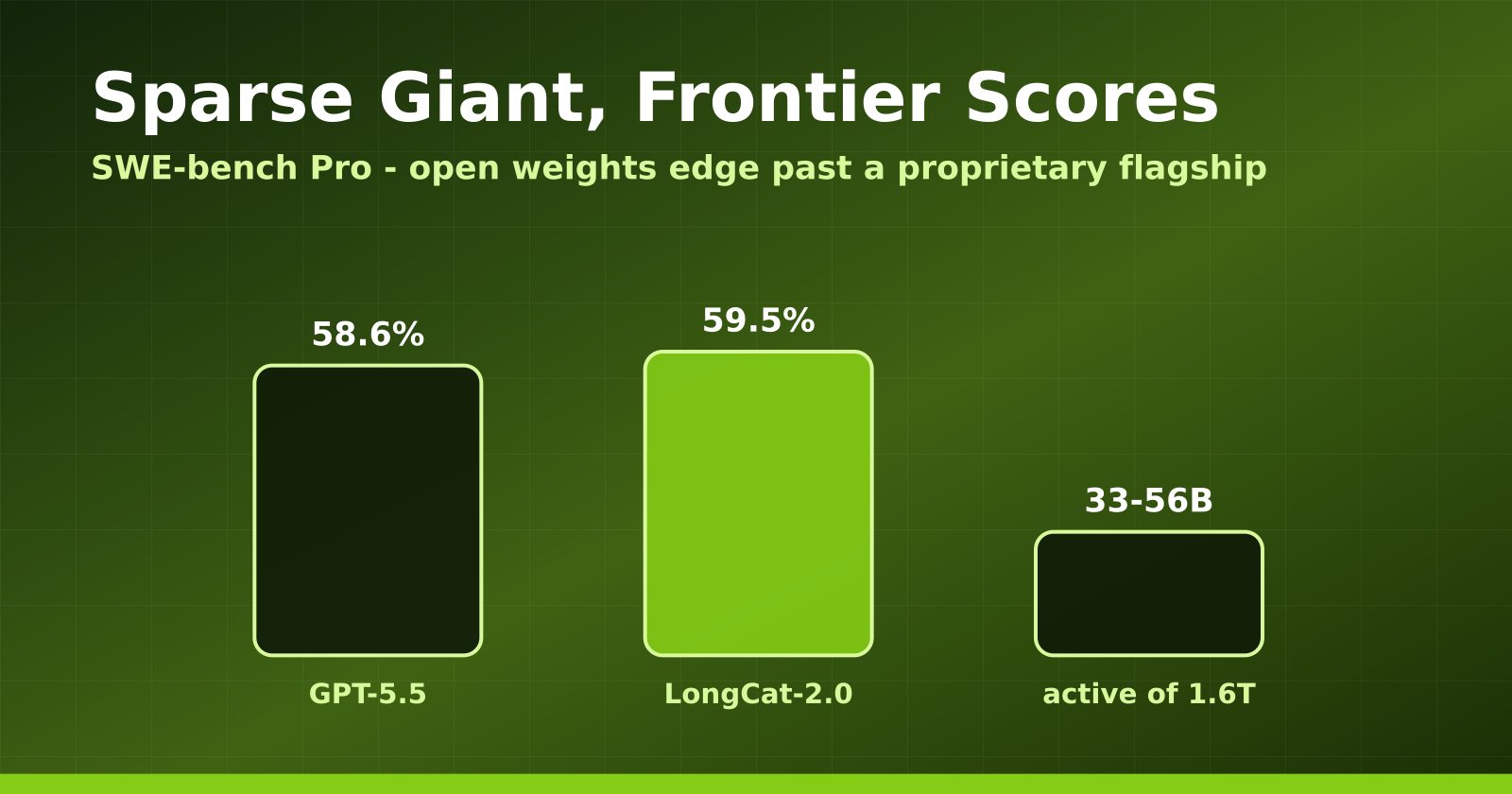
Caption: A sparse MoE activating 33–56B of 1.6T parameters per token, with benchmark parity against proprietary flagships.
Engineering Tip: Evaluate Open Weights Like a Dependency, Not a Demo
MIT-licensed weights remove the legal friction, but adopting a model is a supply-chain decision. Run three checks before anything reaches production. Capability: your own eval set, not the model card — benchmark numbers from any lab, open or closed, are marketing until reproduced. Operations: a 1.6T MoE needs serious multi-GPU serving even with sparse activation; price the inference infrastructure before celebrating the free license, and compare against simply renting it hosted. Provenance: record the exact weight hash you deploy and where it came from — open weights can be re-uploaded, quantized, or tampered with, and "we run LongCat-2.0" should mean a specific artifact, not a name.
The million-token context deserves its own eval: long-context claims routinely degrade in the middle of the window. Test retrieval at 100K, 500K, and 900K tokens before designing features around it.
Sources: VentureBeat, Hugging Face, MarkTechPost.
What do you think? Does anonymous deployment like Owl Alpha give us better model evaluations than named benchmarks ever could?
Ready to organize your knowledge with AI?
BrainMap automatically classifies your notes, discovers connections, and builds your personal knowledge graph. Free to start — no credit card required.
Start for FreeRelated Articles
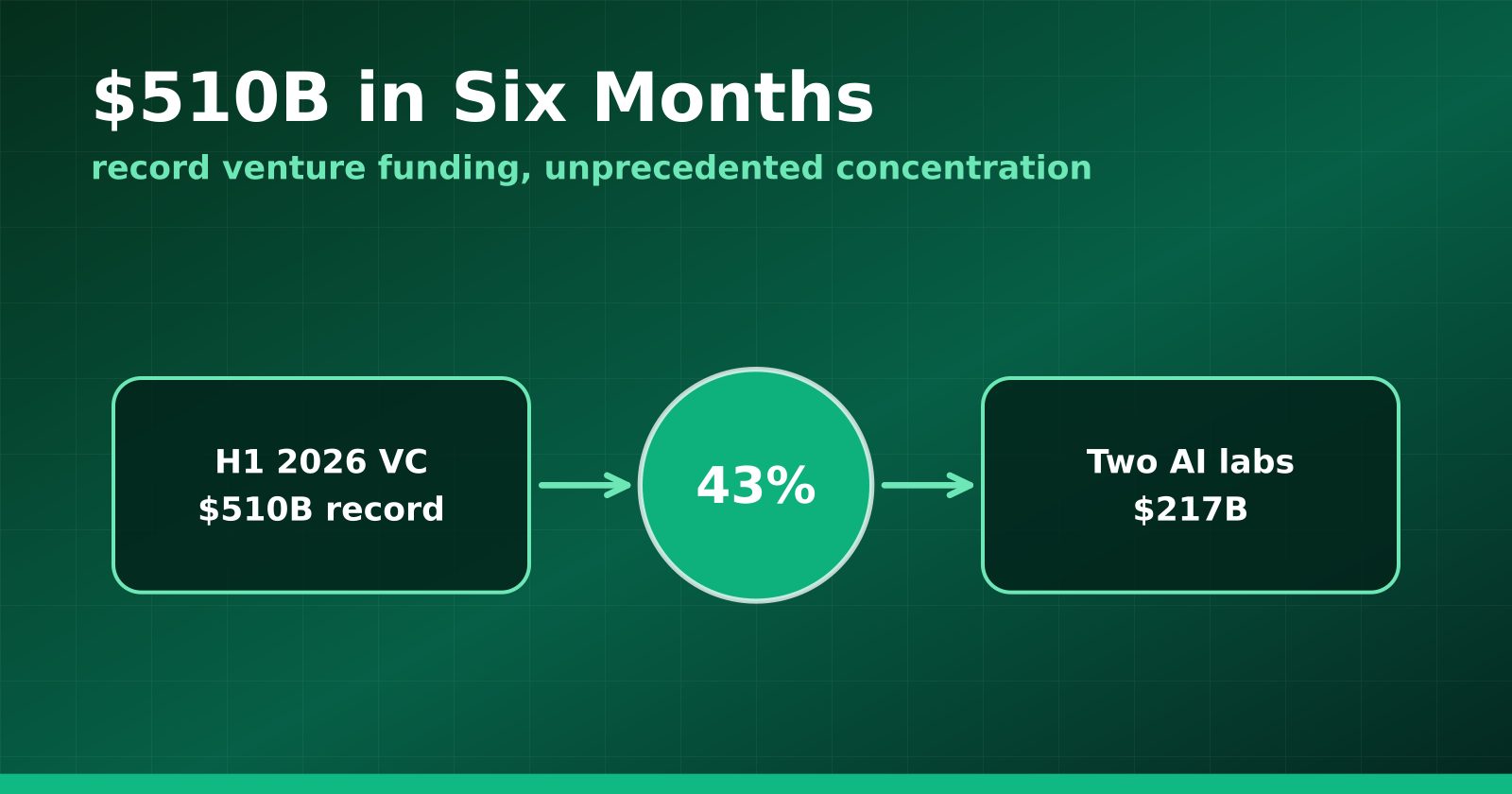
H1 2026 Venture Funding Hit a Record $510B — and Two AI Labs Took 43%
Crunchbase's half-year report shows global VC at an all-time high, with OpenAI and Anthropic alone absorbing $217 billion and AI claiming roughly two-thirds of all deployment.
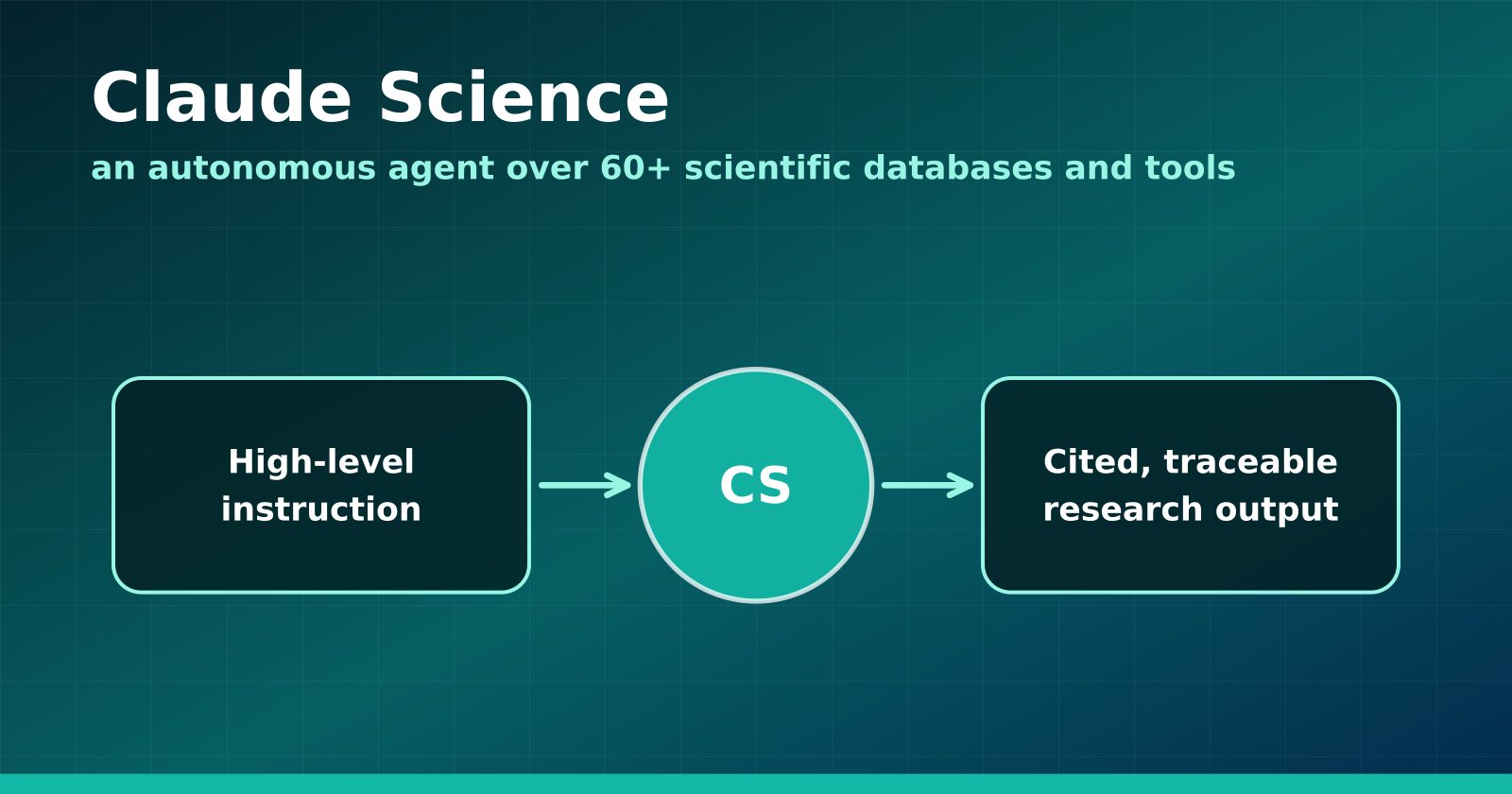
Claude Science Turns the Research Workbench Into an Agent Surface
Anthropic's new flagship product wires 60+ scientific databases and computation tools into an autonomous research agent — and Anthropic is using it to hunt drugs for neglected diseases.
Claude Sonnet 5 Makes Near-Frontier Performance the Default Tier
Anthropic's Sonnet 5 launches at $2 per million input tokens, approaches Opus 4.8 on agentic benchmarks, and becomes the default for Free and Pro users.