OpenAI Floats a 5% Government Stake — AI Governance Reaches the Cap Table
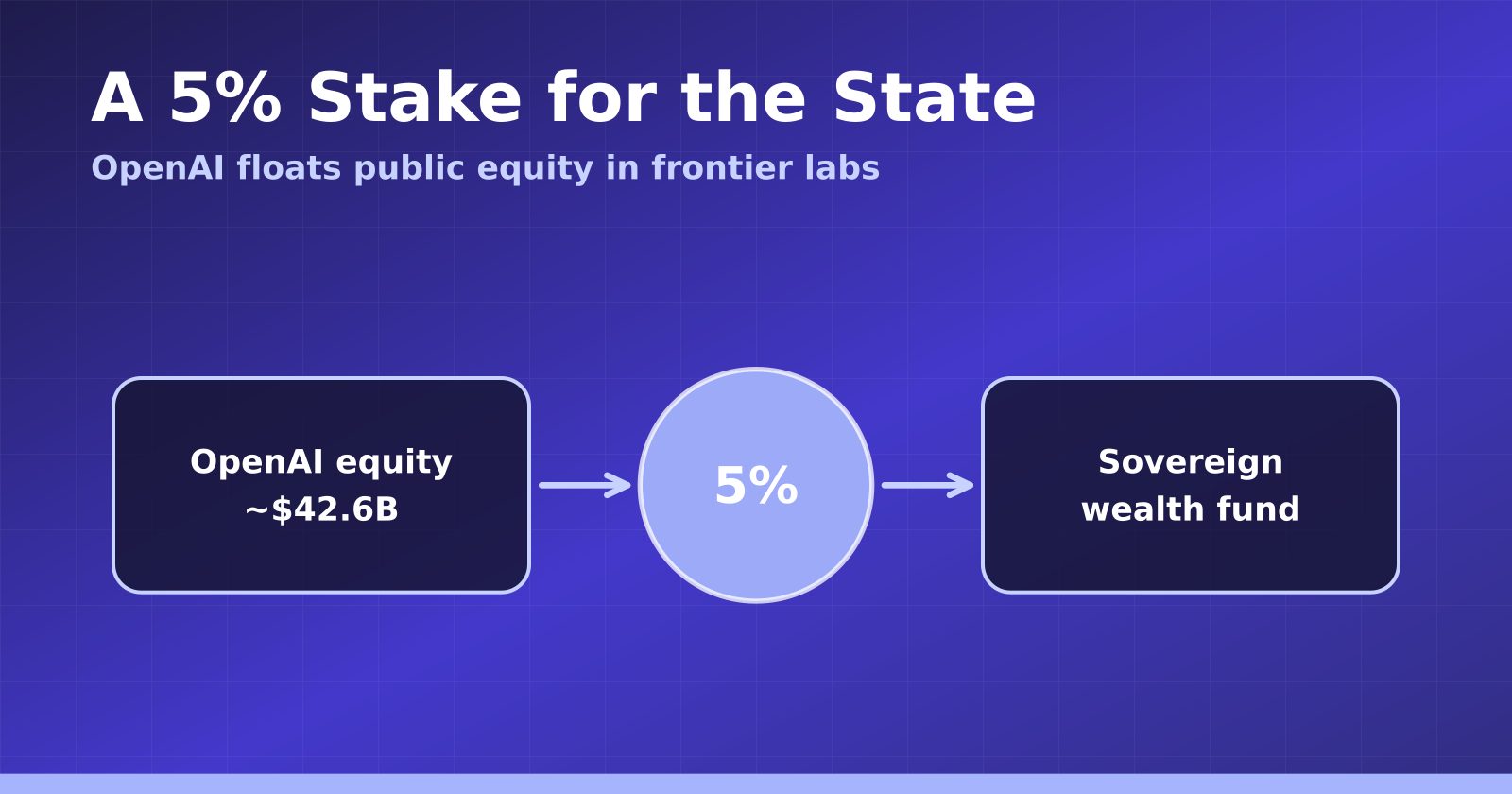
According to a Financial Times report picked up by CNBC and Bloomberg on July 2, OpenAI has proposed handing the US government a 5% equity stake — worth roughly $42.6 billion at the company's recent $852 billion valuation. The proposal envisions a sovereign wealth fund vehicle, modeled on structures like the Alaska Permanent Fund, and contemplates other US labs — Anthropic, Google, Meta — ceding similar stakes. The talks are described as conceptual and could require an act of Congress.
Why Offer Equity Nobody Asked For?
Sam Altman has argued the move is the best way to share AI's upside with the public, and he has been pitching versions of it since early 2025, including an April proposal for a "public wealth fund" holding AI company assets. But the timing does its own talking. The proposal surfaced amid White House negotiations over voluntary frontier-model standards, weeks after export controls yanked a competitor's flagship model offline for 19 days, and ahead of OpenAI's expected September IPO. A government with equity upside in your success is a different counterparty than a government with only regulatory downside to offer. Skeptics will note it also buys something subtler: entrenchment. A sovereign fund holding stakes in today's four leading labs gives the state a financial interest in exactly those four companies leading.
Governance Is Being Negotiated as a Deal
The deeper shift is the format. AI governance in 2026 increasingly looks less like legislation and more like dealmaking: voluntary standards agreed in private talks, selective model restorations via cabinet letter, severity frameworks proposed by the regulated party, and now equity offers. Deals move faster than laws — and bind less. None of this passed through a legislature yet, and most of it could be renegotiated with the next administration.
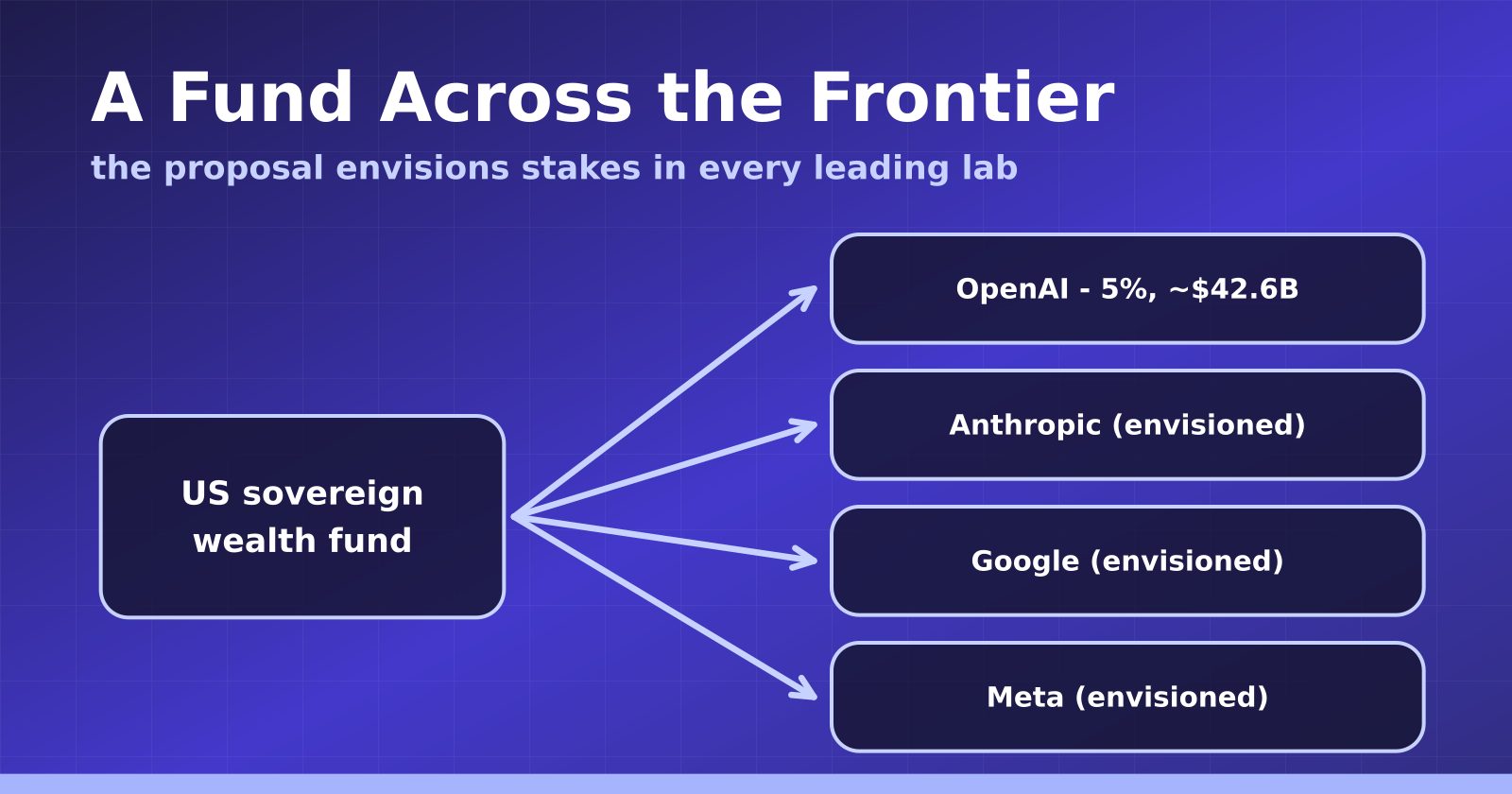
Caption: A proposed sovereign wealth fund would hold stakes across frontier labs — aligning state and lab incentives, for better and worse.
Engineering Tip: Track Provider Governance Like You Track Uptime
For teams building on frontier APIs, these arrangements are operational facts, not just politics: they shape which models exist, who may access them, and on what terms — as the Fable 5 episode proved with a 19-day outage. Add a governance dimension to vendor reviews. For each provider, record its ownership entanglements, active government agreements, and jurisdiction exposure, and note which of your dependencies would be affected if access terms changed. You cannot control the outcome, but a one-page register per provider turns a political surprise into a planned failover — the difference between reading the news and being the news.
Sources: CNBC, Forbes, Bloomberg.
What do you think? Does public equity in AI labs align incentives toward safety — or give the state a reason to protect incumbents?
Ready to organize your knowledge with AI?
BrainMap automatically classifies your notes, discovers connections, and builds your personal knowledge graph. Free to start — no credit card required.
Start for FreeRelated Articles
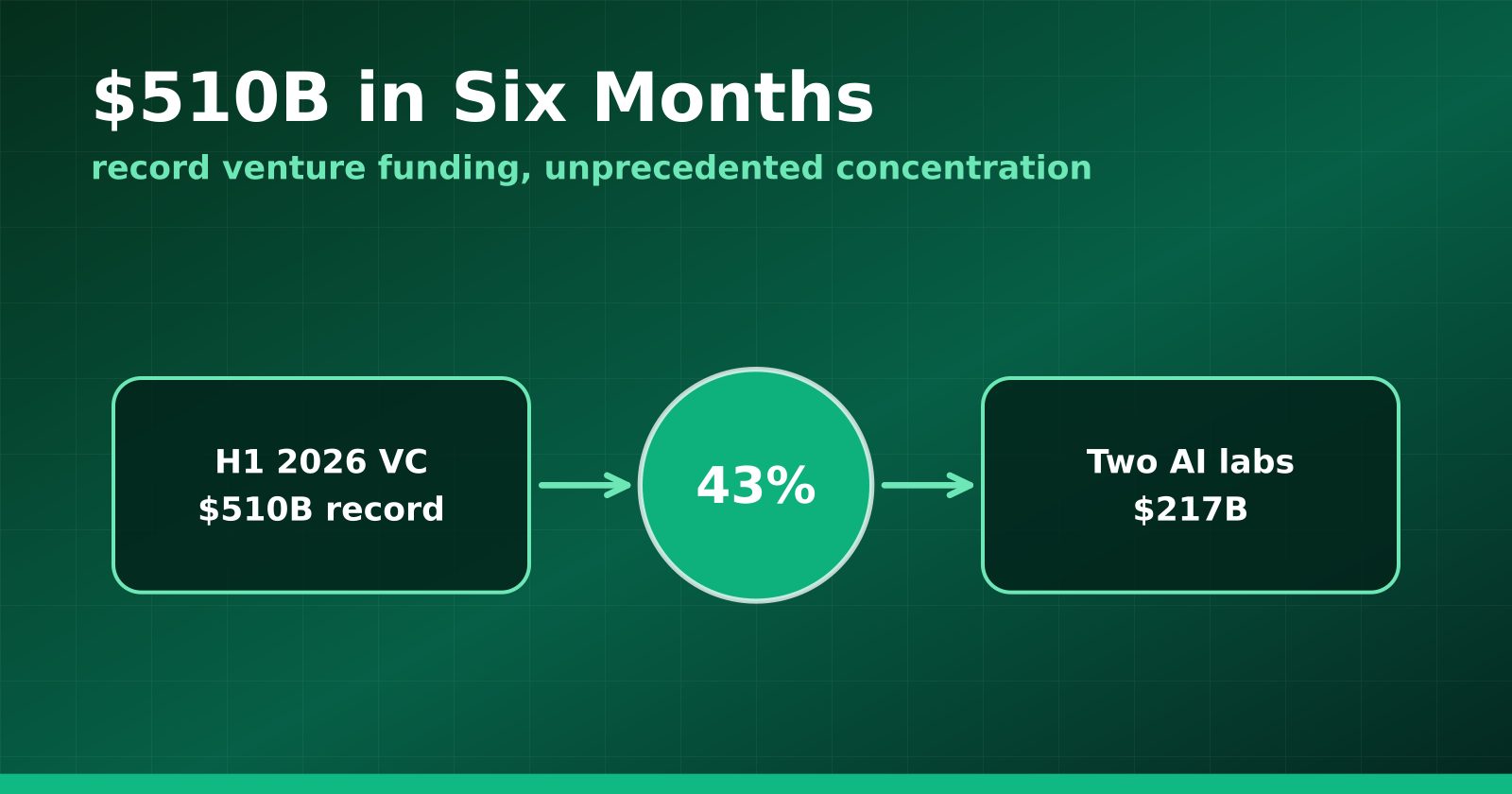
H1 2026 Venture Funding Hit a Record $510B — and Two AI Labs Took 43%
Crunchbase's half-year report shows global VC at an all-time high, with OpenAI and Anthropic alone absorbing $217 billion and AI claiming roughly two-thirds of all deployment.
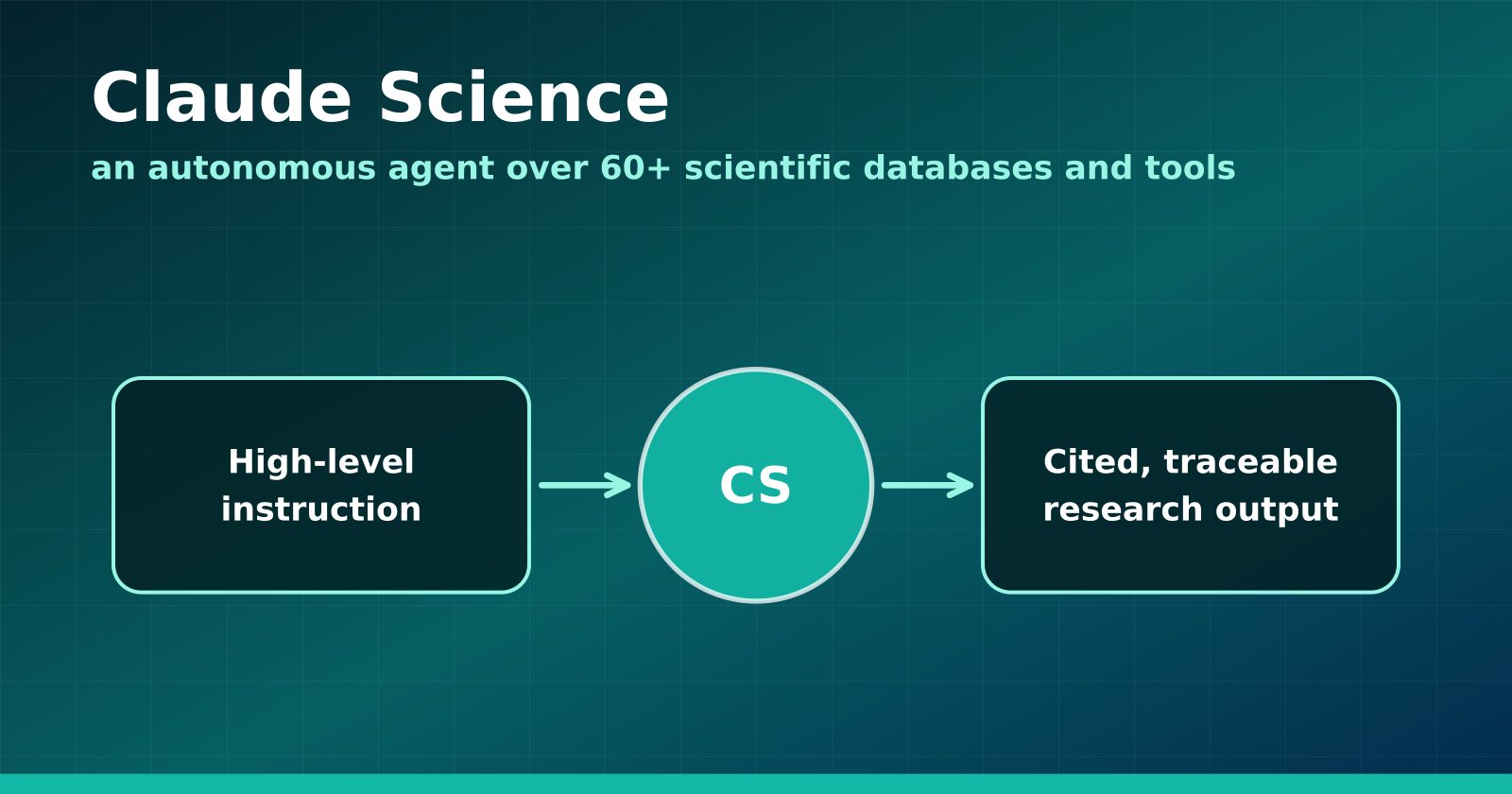
Claude Science Turns the Research Workbench Into an Agent Surface
Anthropic's new flagship product wires 60+ scientific databases and computation tools into an autonomous research agent — and Anthropic is using it to hunt drugs for neglected diseases.
Claude Sonnet 5 Makes Near-Frontier Performance the Default Tier
Anthropic's Sonnet 5 launches at $2 per million input tokens, approaches Opus 4.8 on agentic benchmarks, and becomes the default for Free and Pro users.